Upside Down Fortune: The Printing Mistake That Created America's Most Expensive Error
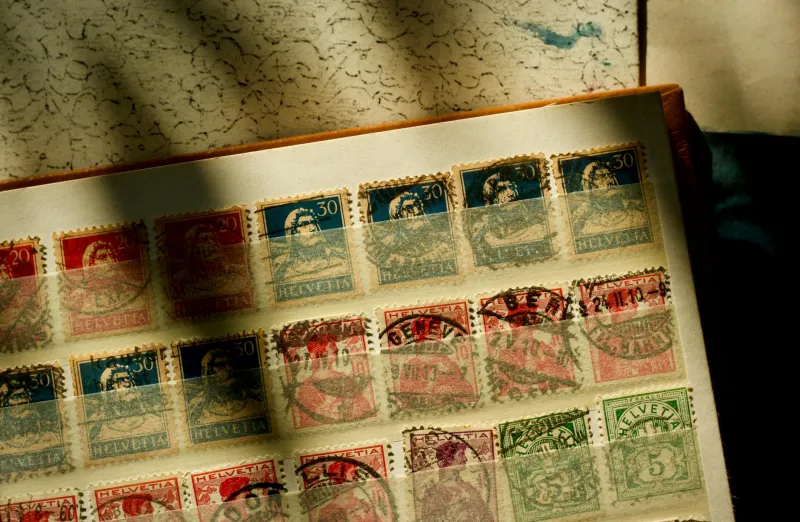
The Error That Launched a Thousand Obsessions
On May 14, 1918, William T. Robey walked into the New York Avenue Post Office in Washington D.C. with $24 in his pocket and a hunch that would change his life forever. He'd heard rumors that the Post Office's brand-new 24-cent airmail stamps might have some printing errors, and as a serious stamp collector, he knew that mistakes could be worth serious money.
What he discovered that day was the holy grail of philatelic errors: a complete sheet of 100 stamps featuring the Curtiss JN-4 "Jenny" biplane printed completely upside down. In the span of ten minutes, Robey had purchased what would become the most famous printing mistake in American postal history.
 Photo: Curtiss JN-4, via thumbs.dreamstime.com
When Speed Trumped Accuracy
The Inverted Jenny, as it came to be known, was born from the chaos of World War I urgency. The U.S. Post Office was rushing to launch America's first official airmail service, and the Bureau of Engraving and Printing was working overtime to produce the commemorative stamps in time for the inaugural flight.
 Photo: Bureau of Engraving and Printing, via content.api.news
The 24-cent stamp required two separate printing passes: first the frame and text in rose red, then the blue vignette featuring the Jenny airplane. Somewhere in the production line at the Bureau of Engraving and Printing, a single sheet of 100 stamps got flipped around before receiving its second printing.
The result? A sheet of stamps where every airplane was flying upside down, as if the pilots had all decided to perform synchronized barrel rolls.
The Collector Who Knew Gold When He Saw It
Robey wasn't just any stamp enthusiast—he was a professional philatelist with an eye for valuable errors. When he spotted the upside-down planes through the post office window, he immediately asked to purchase the entire sheet. The postal clerk, apparently unaware of what he was selling, handed over philatelic history for face value: $24.
Within hours, word of Robey's discovery had spread through Washington's tight-knit stamp collecting community. Post Office officials, realizing their mistake, actually tried to buy the sheet back from Robey, offering him $500—more than twenty times what he'd paid. Robey politely declined.
Three days later, he sold the complete sheet to a New York dealer for $15,000—a sum equivalent to roughly $270,000 today.
The Great Dispersal
The dealer, Eugene Klein, immediately broke up the sheet, selling the individual stamps to collectors around the world. This decision, while profitable, created a treasure hunt that continues to this day. Each of the 100 Inverted Jennys was assigned a position number based on its location in the original sheet, and tracking down these numbered stamps became an obsession for serious collectors.
By the 1930s, individual Inverted Jennys were selling for thousands of dollars. By the 1980s, they were breaking into six-figure territory. In 2007, position 49 sold for $977,500. In 2016, position 36 shattered all records when it sold for $1.35 million at auction.
The Mystery of the Missing Stamp
Of the original 100 stamps, 99 have been accounted for over the decades. The exception is position 49—not the one that sold in 2007, but a different stamp that was stolen in 1955 and has never been recovered.
The theft occurred during a stamp exhibition at the American Philatelic Society convention in Norfolk, Virginia. The stamp, owned by collector Ethel Stewart McCoy, was displayed in a supposedly secure case. When McCoy returned to check on her prized possession, she found an empty display case and a mystery that has confounded investigators for nearly seven decades.
The FBI has maintained an open case file on the missing Inverted Jenny, making it one of the longest-running art theft investigations in American history. The bureau has followed leads from Florida to Switzerland, investigated dozens of suspects, and even consulted psychics. The stamp remains missing, though it's estimated to be worth well over $2 million today.
The Accidental Millionaires
The irony of the Inverted Jenny saga is that the printing error that created these valuable stamps was probably the result of a single worker having a bad day at the Bureau of Engraving and Printing. Someone simply fed a sheet of stamps into the printing press the wrong way, creating an error so minor that it almost went unnoticed.
Yet this tiny mistake generated enormous wealth for those lucky enough to own the stamps. Collector Ethel Stewart McCoy, who owned four Inverted Jennys before the theft, once quipped that her stamps had appreciated faster than IBM stock during the computer boom.
The Modern Hunt Continues
Today, owning an Inverted Jenny is considered the ultimate achievement in American stamp collecting. The stamps rarely come up for auction—most are held by serious collectors who view them as family heirlooms rather than investments.
When they do appear at auction, the sales become major events in the collecting world. Auction houses promote Inverted Jenny sales like heavyweight boxing matches, complete with preview exhibitions and champagne receptions.
The American Philatelic Research Library maintains a database tracking the ownership and sale history of all known Inverted Jennys, and stamp authentication services use high-powered microscopes and chemical analysis to verify the stamps' authenticity—a necessary precaution given the millions of dollars at stake.
The Error That Keeps on Giving
Perhaps the strangest aspect of the Inverted Jenny story is how a simple printing mistake continues to generate headlines more than a century later. Every auction sale makes national news. Every authentication discovery sparks debate among collectors. The missing stamp continues to tantalize treasure hunters around the world.
In a world where most collectibles lose value over time, the Inverted Jenny has proven to be the rare mistake that only gets more valuable with age. It's a reminder that sometimes the most valuable things in life are the ones nobody meant to create in the first place.
And somewhere in Washington D.C., there's probably a postal worker's descendant who still kicks themselves for not noticing that those airplanes were flying upside down.