Population 74, Customs Included: The Montana Train Stop That the Federal Government Forgot to Un-Name a Port
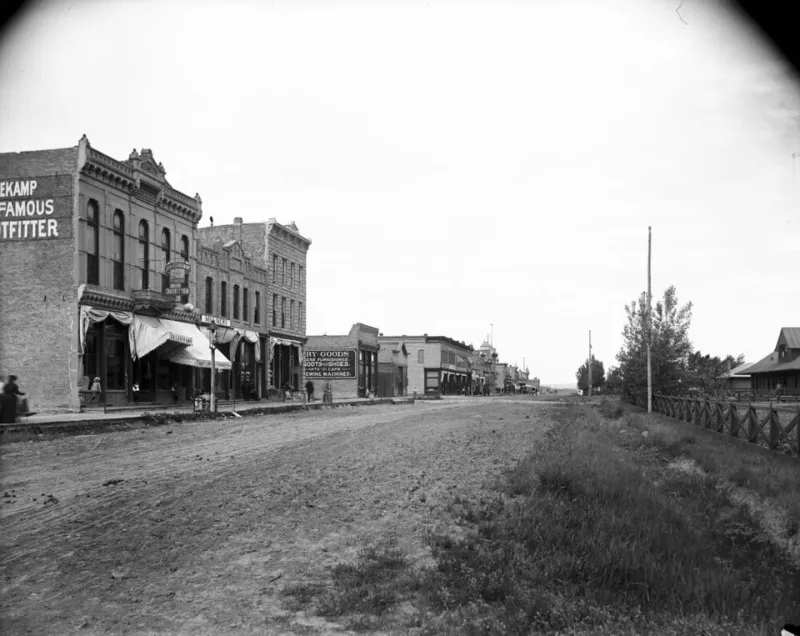
Photo: Haynes, F. Jay (Frank Jay), 1853-1921, Public domain, via Wikimedia Commons
There is a certain kind of federal document that, once created, takes on a life entirely independent of the reality it was meant to describe. It gets filed. It gets cross-referenced. It gets incorporated into other documents that reference it as an established fact. And then it sits there, quietly official, while the world outside the filing cabinet continues being nothing like what the paperwork says.
This is the story of one of those documents, and the tiny Montana railroad depot it accidentally elevated to the legal status of a major international gateway.
A Clerical Error in the Age of the Great Depression
In 1931, the federal government was reorganizing its customs infrastructure along the northern border. The process involved a great deal of paperwork — lists of designated ports of entry, staffing allocations, jurisdictional boundaries — all of it processed by human beings working with typewriters and carbon copies in an era before anyone had invented a reliable way to catch a transposition error before it became official.
Somewhere in that process, a small railroad depot in Sweetgrass County, Montana — serving a community called Lothair, population approximately 74 — was entered onto the official list of designated U.S. ports of entry. The entry was almost certainly meant to reflect a different location, possibly the much larger border crossing at Sweetgrass itself, which sits directly on the Canadian line and handles actual international traffic. Lothair, by contrast, was an inland agricultural depot servicing local grain shipments and the occasional passenger car. It was not on the Canadian border. It was not near the Canadian border. It was a train stop.
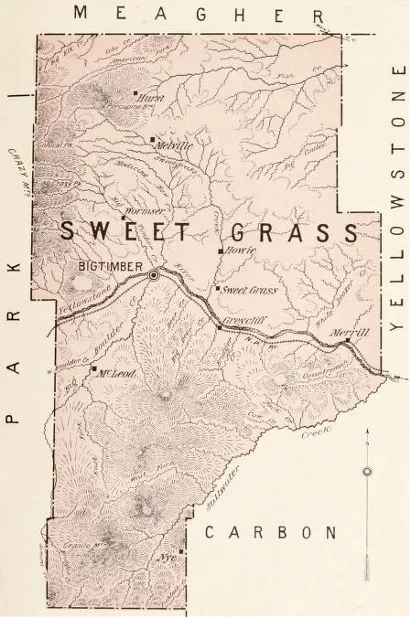 Photo: Sweetgrass County, via www.mtgenweb.com
The document was signed, filed, and distributed to the relevant federal offices.
No one caught it.
What "Official Port of Entry" Actually Means
This is where the story gets genuinely strange, because a designated port of entry isn't just a label. It carries specific legal weight under U.S. customs law. A port of entry is a location where the federal government has formally authorized the arrival of international travelers and goods into the United States. Customs agents are required to be available. Travelers are legally permitted to use it as their point of official entry. Import and export transactions can be processed there.
Lothair, Montana — population 74, one railroad depot, no international border within comfortable driving distance — now had all of that on paper.
Federal staffing records from the 1930s indicate that the Customs Service did, at various points, attempt to reconcile its official port list with actual staffing capacity, and that Lothair appeared in at least one internal allocation document as a location requiring agent presence. Whether any agent was ever actually dispatched there is unclear. What is clear is that no one in the chain of review flagged the location as implausible. The document said it was a port. The document had been signed by the right people. That was apparently sufficient.
The Ranchers Who Read the Fine Print
Word of Lothair's curious federal status did not stay quiet for long, at least not locally. In small agricultural communities, any legal designation that touches on import duties gets attention fast. Cattle ranchers along the Hi-Line — the stretch of northern Montana served by the Great Northern Railway — were accustomed to navigating complex customs procedures when importing breeding stock from Canadian ranches. Duties, inspections, paperwork: it was a significant operational burden.
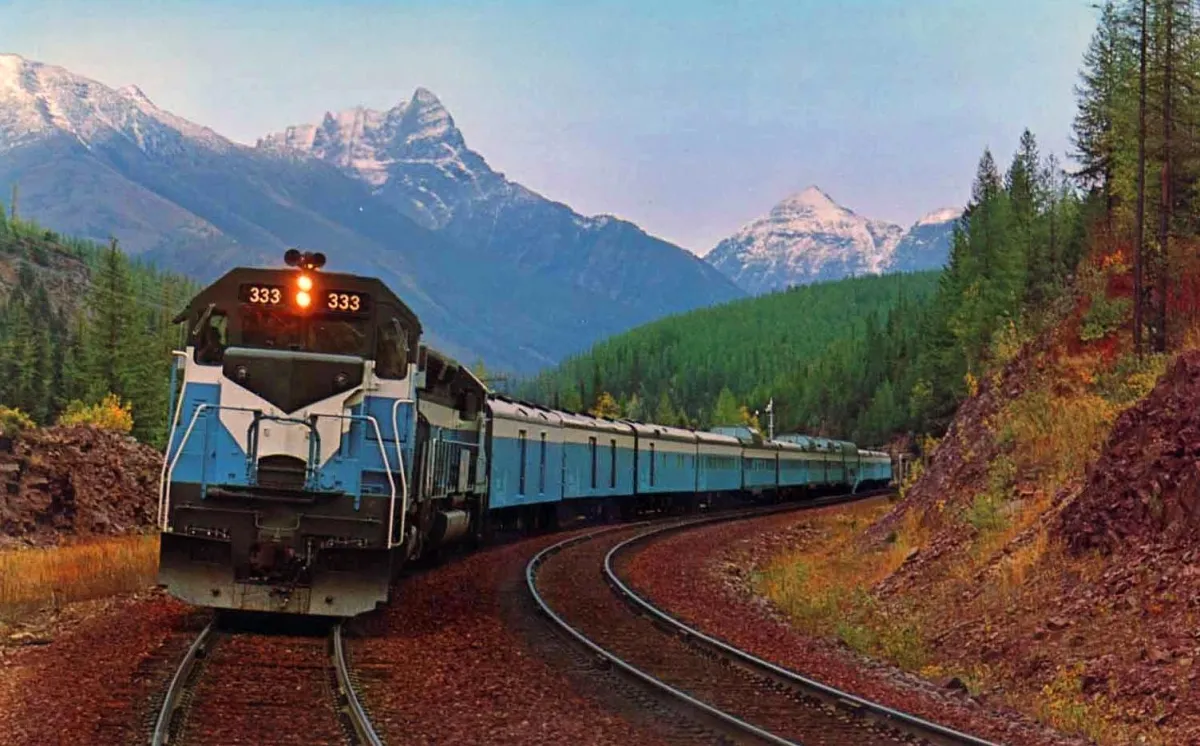 Photo: Great Northern Railway, via www.american-rails.com
Sometime in the late 1930s, according to accounts preserved in county agricultural records and a 1960s-era regional history compiled by a Montana State University extension office, at least a handful of ranchers began routing cattle imports through Lothair's designation. The logic was straightforward: if Lothair was an official port of entry, transactions processed under its designation were legally valid. The depot's agent — to the extent one existed at all — was either cooperative, absent, or simply unequipped to refuse.
The cattle came in. The paperwork named Lothair. The duties, in some cases, were processed at rates or under conditions that wouldn't have applied at a standard border crossing. Nobody in Washington was looking closely enough at Lothair's transaction volume to notice that a depot in a town of 74 people was processing international livestock imports.
The Machinery of Bureaucratic Inertia
What kept this situation alive across multiple presidential administrations — from Hoover through Truman and into the early Eisenhower years — was the same force that created it: paperwork momentum. Correcting an official federal designation requires someone to identify the error, document it, route the correction through the appropriate channels, get the revised document signed by the right authorities, and distribute the update to every office holding the original. That process requires someone to care enough to start it.
For 25 years, apparently no one did. Or, more precisely, no one with the right combination of awareness and authority did at the same time.
The correction, when it finally came, was characteristically quiet. Sometime in the mid-1950s — the exact year varies depending on which federal archive you're consulting — Lothair's designation was removed from the official port of entry list during a routine customs infrastructure review. The review was not specifically targeting Lothair. The depot simply appeared on a list of low-activity ports flagged for evaluation, someone finally looked at a map, and the designation was administratively withdrawn.
No press release. No congressional hearing. No acknowledgment that a grain depot in rural Montana had technically been an international gateway for a quarter century.
The Quiet Lesson in How Government Actually Works
Lothair today is the kind of place that doesn't appear on most maps. The railroad infrastructure that gave it whatever modest importance it once had has largely disappeared. The depot is gone. The designation is gone. The ranchers who knew how to use it are gone.
But the story that remains is a genuinely useful illustration of something most civics classes don't cover: the gap between what a government document says and what reality contains can be enormous, and bureaucratic systems are surprisingly bad at noticing the difference on their own. The federal government didn't discover Lothair's phantom port status through vigilance. It discovered it through a routine audit that happened to look in the right direction.
For 25 years, a town of 74 people was, on paper, as significant an entry point into the United States as any major international airport. The paperwork said so. And in the world of federal designation, that's a surprisingly long way toward being true.