Sky Ownership: The Colorado Farming Town That Tried to Patent Its Own Rain
If you've ever looked up at a storm rolling in and thought, that rain belongs to me, you're probably either a poet or a farmer in a desperate drought. In the early 1900s, one small Colorado community decided they were both — and then went ahead and made it law.
The result was one of the strangest legal disputes in American municipal history: a multi-year argument about whether a town could own precipitation, what exactly counts as a natural resource, and whether the sky has a landlord.
Spoiler: it does not. But the fight to prove that was considerably more complicated than anyone expected.
The Problem with Colorado's Sky
To understand why a farming town would try to claim ownership of rainfall, you have to understand what water meant in the early 20th century American West. It wasn't just a resource. It was survival, currency, and power all rolled into one.
Colorado's water law operated — and still operates — under a doctrine called prior appropriation, often summarized as 'first in time, first in right.' If you diverted water from a river and put it to beneficial use before your neighbor did, you had a senior claim to that water. In a dry state where rivers ran low every summer, those claims were worth fighting over. People did fight over them. Sometimes violently.
But prior appropriation applied to surface water — rivers, streams, irrigation ditches. Rainfall was murkier territory. When rain fell from the sky onto your land, was it yours? What if it ran off into a neighboring property? What if a town upstream was diverting runoff before it reached you?
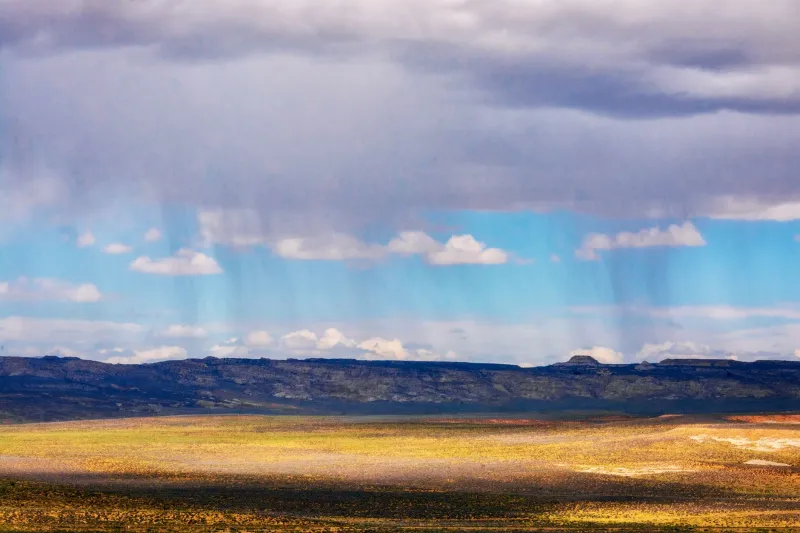
For farmers in the drier corners of Colorado's Front Range, these weren't academic questions. They were existential ones.
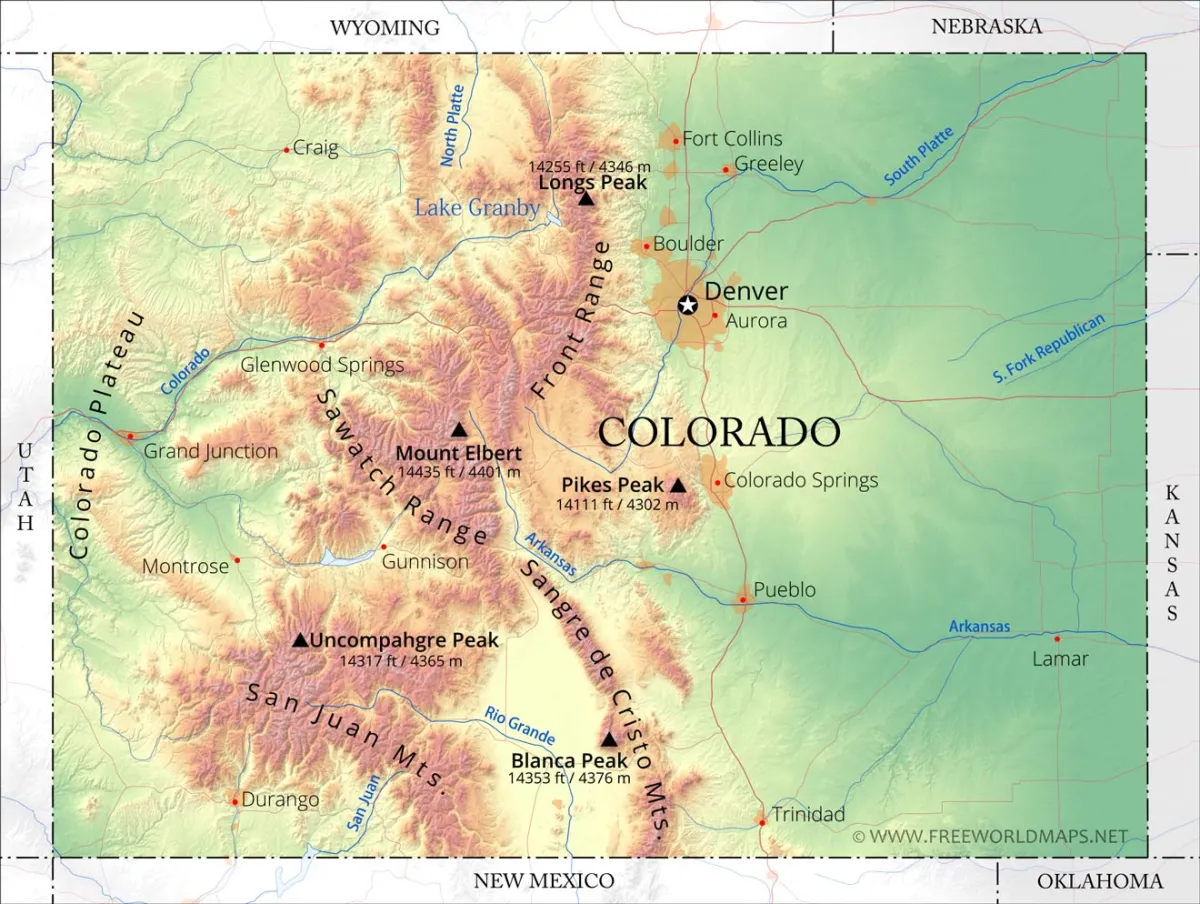 Photo: Colorado's Front Range, via www.uncovercolorado.com
The Ordinance Heard Round the County
Sometime in the early 1900s — accounts from Colorado water law histories place similar municipal actions in this period across several small agricultural communities — a town council in one of the state's smaller farming settlements decided to get creative.
The ordinance they passed was breathtaking in its ambition and slightly baffling in its logic. In essence, it declared that all precipitation falling within the town's municipal boundaries was the legal property of the town. Not just water that collected in reservoirs or ran through irrigation channels — all of it. Every drop, from the moment it left the cloud to the moment it hit the ground, was officially theirs.
The council's reasoning, such as it was, went something like this: the town had built and maintained the infrastructure — ditches, channels, retention ponds — that captured and distributed rainwater. That investment, they argued, gave them a proprietary interest in the water itself. If a business could own the pipes that carried water, why couldn't a municipality own the water that filled them?
It was a creative argument. It was also, as neighboring towns immediately pointed out, completely insane.
The Neighbors Weigh In
The reaction from surrounding communities was swift and not particularly diplomatic.
Downstream towns argued that the ordinance was an attempted theft of water that naturally flowed across property lines. If rain fell on the claiming town's northern edge and drained south into a neighboring county, did the town now own that water too? Could they demand it back? Could they bill someone for it?
Upstream communities had a different complaint: if this ordinance stood, what was stopping every municipality in the state from making the same claim? Colorado had dozens of small farming towns, all of them thirsty, all of them looking at the same sky. A precedent that allowed one town to claim sovereign rights over rainfall was a precedent that would trigger chaos.
State legislators, when the dispute eventually reached Denver, were initially dismissive. The ordinance seemed too absurd to require a serious response. Then the town's attorneys showed up with actual legal arguments, and the dismissiveness evaporated.
The Surprisingly Serious Legal Fight
The town's lawyers leaned on a combination of property law, water rights precedent, and a philosophical argument that was genuinely ahead of its time: that natural resources only have value when human effort is applied to capture and use them, and therefore the entity that invests in capture infrastructure has a legitimate ownership claim over the resource itself.
It wasn't entirely without merit. American property law had long recognized that certain resources — oil, minerals, even wild animals in some contexts — could be 'reduced to possession' through capture, and that capture created ownership rights. The town was arguing that rainfall was no different from a wild animal: free until caught, but yours once you caught it.
State water officials spent the better part of several years working through the implications. The ordinance was never formally upheld in court, but it was also never cleanly struck down in a way that resolved the underlying questions. Instead, it became a prolonged administrative headache that forced Colorado legislators to clarify, in considerably more explicit language, exactly how precipitation fit into the state's prior appropriation framework.
The Ripple Effect
The legal arguments generated by that one stubborn farming town's ordinance quietly worked their way into Colorado water law discussions for decades. When the state eventually developed more comprehensive rules around groundwater, stormwater capture, and rainwater collection — debates that intensified again in the late 20th century as drought conditions worsened — the philosophical groundwork laid by those early disputes was still visible in the legal record.
Today, Colorado's relationship with rainwater collection remains genuinely complicated. For years, it was actually illegal for individual homeowners to collect rainwater in barrels — a restriction that struck most people outside the state as bizarre, but that made perfect sense within the prior appropriation framework. The state only began relaxing those restrictions in 2016.
The ghost of that early municipal ordinance — the idea that rainfall is a resource with an owner, not a free gift from the sky — never entirely went away.
A small farming town, desperate enough to try claiming the weather, had accidentally asked a question that Colorado is still answering.