Can You Own a Word? The Trademark Wars That Tried to Put a Price Tag on the English Language
The Word You Use Every Day Might Belong to Someone
Imagine waking up one morning to discover that someone has filed a legal claim on the word "on." Not a brand name. Not a slogan. The word "on" — two letters, one syllable, used approximately ten thousand times in any given conversation before lunch.
This is not a hypothetical. In the early 2000s, a New Hampshire man did exactly that, submitting a trademark application to the U.S. Patent and Trademark Office that sent intellectual property attorneys into a quiet but genuine panic. Not because anyone seriously believed it would succeed, but because the application exposed something uncomfortable: the rules governing what can and cannot be trademarked are stranger and more porous than most people realize.
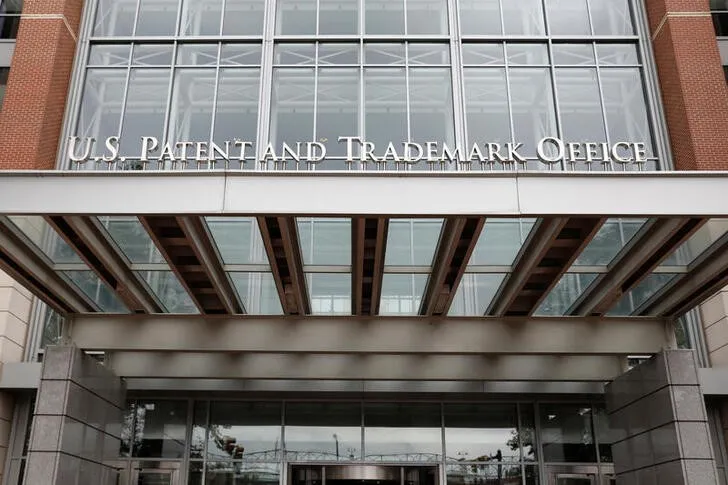 Photo: U.S. Patent and Trademark Office, via cloudfront-us-east-2.images.arcpublishing.com
And the word "on" was far from the most audacious attempt.
How Trademark Law Actually Works (and Where It Gets Weird)
The U.S. trademark system was designed with a reasonable premise: businesses should be able to protect distinctive names, logos, and phrases that identify their products. The word "Apple" means something specific when it appears on a laptop. The swoosh means something specific on a sneaker. Protecting those associations makes commercial sense.
But the system runs into trouble at the edges — and the edges, it turns out, are enormous.
Trademark law generally prohibits the registration of "generic" or "merely descriptive" terms. You cannot trademark the word "bread" if you sell bread. You cannot trademark "fast" for a speed-related service. The logic is that doing so would effectively hand one company a monopoly over ordinary communication, which is bad for everyone who uses language to, say, conduct business.
The problem is that the line between "distinctive" and "descriptive" is not always obvious. And the Patent and Trademark Office processes thousands of applications. Some unusual ones slip through. Others trigger reviews that, while ultimately unsuccessful, generate significant legal costs for whoever has the misfortune of being caught in the dispute.
The Cases That Should Not Have Gotten This Far
The New Hampshire "on" application was eventually rejected, but not before it required a formal legal review — a process that costs time, money, and the collective patience of everyone involved. The applicant argued, with a straight face, that "on" had acquired a specific commercial meaning in the context of his business. The examiner disagreed. The word returned to the public domain, where it had always belonged.
But other cases have been considerably less straightforward.
In the 1990s and early 2000s, a wave of aggressive trademark filings targeted surprisingly common language. One company attempted to lock down the phrase "you" in an advertising context. Another pursued trademark protection for a color — not a specific shade tied to a product, but an entire region of the color spectrum. Several technology companies filed applications for single-letter trademarks, with varying degrees of success.
The cases that actually succeeded created real problems. When a term becomes legally protected, businesses already using that term in ordinary commerce face a choice: rebrand at significant expense, negotiate a license, or fight a legal battle they may not be able to afford. For small businesses, that calculus is rarely favorable.
One of the more damaging examples involved the word "Olympic." The U.S. Olympic Committee holds unusually broad trademark rights over Olympic-related terminology, granted by a specific act of Congress in 1978. Businesses using words like "Olympic" in their names — gyms, pizza shops, cleaning services that had operated under those names for decades — found themselves on the receiving end of cease-and-desist letters. Some complied. Some fought. Few won.
The Philosophy Problem at the Heart of Language Ownership
What the "on" application and its cousins reveal is a genuine philosophical tension inside intellectual property law. Language is a commons. It belongs, in some fundamental sense, to everyone who uses it. But capitalism runs on exclusivity — on the ability to carve out territory and defend it.
When those two systems collide, the results are predictably strange. Companies have trademarked "super," "edge," "fresh," and "pure" in various commercial contexts. Apple holds trademark protection over the word "apple" in the technology sector, which means that a theoretical tech company trying to name itself after the fruit would face legal complications that a fruit stand would not.
The law tries to manage this through the concept of "distinctiveness" — a term can be protected if it has acquired a specific commercial meaning through use, even if the underlying word is common. But distinctiveness is a judgment call, and judgment calls create inconsistency.
Some examiners are stricter. Some applicants are more persistent. Some cases get appealed, and appellate courts occasionally reach conclusions that surprise everyone. The system is not a clean machine. It's a negotiation.
What Happens When the Language Gets Fenced Off
The practical consequences of aggressive trademark claims on ordinary language are not abstract. When a term gets locked up, the ripple effects move through commerce in ways that are difficult to predict and expensive to untangle.
Small businesses are the most vulnerable. A regional diner that has operated as "The Fresh Grill" for twenty years has neither the legal budget nor the brand recognition to fight a trademark challenge from a national chain that decided to trademark "fresh" in a food service context. The diner rebrands. The regulars are confused. The chain moves on to its next filing.
The New Hampshire man who tried to trademark "on" probably understood that he was unlikely to succeed. But the application itself was a kind of experiment — a probe of the system's edges. And what it found there was not a clean wall. It was a fog, full of gaps and ambiguities and possibilities that a sufficiently determined applicant could, under the right circumstances, exploit.
The English language remains, for now, mostly in the public domain. But the fence keeps going up, one application at a time.