One Misspelled Sign, Four Decades of Silence: The Texas Town Where a Typo Became a Family War
Some feuds start over land. Some start over money, or betrayal, or a genuine wrong that deserves to be remembered. And then there are the feuds that start over a vowel — the ones where nobody can quite explain how something so small became something so permanent.
In a small Texas town that has asked, with understandable embarrassment, not to be fully identified in national press coverage, two family businesses spent roughly forty years refusing to acknowledge each other's existence. No shared suppliers. No mutual customers. No eye contact at the hardware store. The whole thing started with a sign painter who couldn't spell.
The Original Insult
The story, as best as anyone has been able to reconstruct it, begins sometime in the early 1980s. Two families — we'll call them the Aldridges and the Pruetts, which are not their actual names — ran competing businesses on the same commercial strip. The exact nature of the businesses has been described variously as feed supply, farm equipment, and general hardware, depending on which family member you ask. The overlap in their customer bases was significant enough to generate friction and similar enough in scope that each family considered the other a direct threat.
The Pruetts, in the process of expanding, commissioned a new storefront sign. The sign painter — working from a handwritten order, in a hurry, or possibly both — misspelled the business name. Not dramatically. Not in a way that changed the pronunciation. Just one letter, transposed, in a way that made the name look sloppy and, to the Aldridges watching from across the street, hilarious.
The Aldridges made a comment. The Pruetts heard about it. The Pruetts did not find it hilarious.
The Escalation Nobody Planned
What happened next followed the precise logic of small-town grievance: the initial comment led to a retort, the retort led to a decision not to do business with anyone who'd laughed at them, and the decision not to do business hardened, over weeks and months, into a policy.
The Pruetts stopped referring customers to the Aldridges. The Aldridges, who had caught wind of this, stopped referring customers to the Pruetts. Both families began quietly steering their networks — friends, relatives, regular customers — away from the other shop. Suppliers who worked with one family were gently informed that working with the other family was, let's say, noted.
By the mid-1980s, the feud had its own infrastructure. It wasn't spoken about loudly. It was simply understood.
The Geography of a Grudge
What makes this story genuinely strange isn't the feud itself — small-town business rivalries are older than Texas — but how completely it was absorbed into the local landscape without anyone feeling the need to explain it.
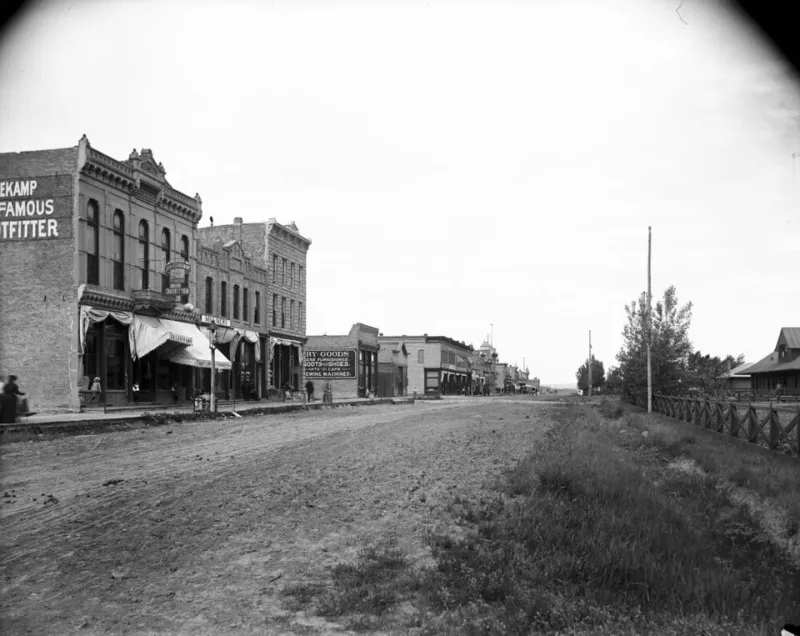
People who grew up in the town during the 1990s and 2000s knew, in the way you know things that were never explicitly taught, that you didn't shop at both places. You picked a side when you were young, usually because your parents had picked a side, and you maintained it without asking questions. The two businesses occupied the same commercial strip for four decades and might as well have been in different zip codes.
Local lore accumulated around the feud the way lore always does — slowly, with embellishments. By the time the third generation was running both shops, the stories about the original cause had drifted into mythology. Some people said it was a contract dispute. Some said it was a romantic entanglement. One version involved a truck, a fence, and a county commissioner.
Nobody said it was a spelling mistake, because nobody remembered that it was a spelling mistake.
The Discovery
The actual origin of the feud surfaced, appropriately enough, because someone was cleaning out a storage room. A grandchild — one of the Pruett heirs, now running the family business — found a box of old business records that included correspondence from the early 1980s. Among the receipts and invoices was a letter, written in the clipped, formal tone people used when they were furious but trying to sound measured, from the elder Pruett to the elder Aldridge.
The letter referenced the sign. It referenced the comment. It announced, in terms that left no room for interpretation, that the Pruetts considered the matter a serious slight and intended to conduct their business accordingly.
The grandchild, who had grown up understanding the feud as a fundamental feature of reality — like weather, or property taxes — read the letter and reportedly sat down on the storage room floor for a while.
What Forty Years of Silence Looks Like From the Outside
When local journalists pieced the story together, the reaction in town was split almost perfectly between people who found it funny and people who found it quietly mortifying. The businesses had, between them, shaped the commercial culture of the town's main strip for four decades. Supplier relationships, customer loyalties, even the layout of who advertised in the local paper — all of it had been influenced, downstream, by a sign painter's error and an old man's pride.
Both families, when reached for comment, were notably reluctant to discuss it. One side suggested the feud had been "exaggerated by outsiders." The other side did not respond at all, which, given the circumstances, felt appropriate.
The misspelled sign, for its part, was replaced sometime in the late 1980s. The correct spelling has been on the storefront for thirty-five years. The feud it created outlasted it by decades — which is either a testament to human stubbornness or proof that in small towns, a grudge, once properly maintained, becomes its own kind of institution.
Somewhere in Texas, two families are still not talking. At least now they know why.