Shadow Landlord: The Kentucky Lawyer Who Spent 20 Years Trying to Own Darkness
Most people watch a solar eclipse and feel something like wonder. James Pigg watched one and apparently thought: who's profiting from this?
Pigg was a Kentucky attorney practicing in the 1850s, known locally as a sharp legal mind with an unusual appetite for edge cases. He was the kind of man who read contracts the way other people read novels — looking for the plot holes. And sometime around 1852, he became convinced he had found the biggest plot hole in American property law: nobody owned the shadow.
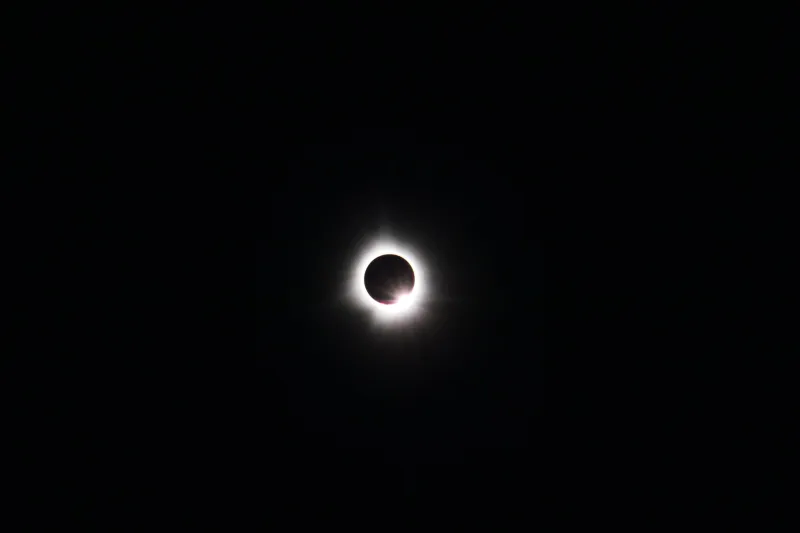
Not just any shadow. The shadow. The one cast across the face of the earth during a total solar eclipse — that sweeping, traveling corridor of darkness that crosses hundreds of miles in minutes and leaves witnesses trembling in its wake. Pigg's argument was straightforward, at least to him. If land could be owned, and the space above land could be owned, then surely the temporary, dramatic absence of light moving through that space was a natural phenomenon subject to the same ownership logic.
He filed his first formal claim in 1853. The clerk accepted the paperwork with the polite confusion of a man who has seen everything. The judge dismissed it within a week.
Pigg filed again.
The Legal Theory That Wouldn't Die
To understand why Pigg's crusade lasted more than two decades, you have to understand the genuine legal murkiness he was poking at. Mid-19th century American property law was still sorting itself out. The doctrine of cuius est solum — the idea that owning land means owning everything above and below it, from the core of the earth to the heavens — was widely cited but inconsistently applied. Courts were actively debating what "above" actually meant. Did it include air? Weather? Light?
Pigg's briefs, which survive in fragments in Kentucky courthouse archives, were not the ramblings of a crank. They were methodical, if increasingly baroque, legal arguments that cited English common law, Roman property doctrine, and a handful of American cases involving water rights and mineral claims. His central thesis evolved over the years: the eclipse shadow was not merely an absence of light but a moving natural resource with measurable economic value. Farmers lost working hours. Businesses closed early. Livestock behaved erratically. If a river's temporary flooding could create liability, why couldn't a shadow's temporary arrival create ownership?
He even attempted to calculate the shadow's dimensions during the 1854 eclipse and submitted those measurements as evidence of a definable, bounded phenomenon — not some vague atmospheric condition, but a specific, trackable entity with edges and a path.
Courthouses across Kentucky, and eventually into Tennessee and Ohio, became familiar with his filings. Most dismissed them without comment. A few judges wrote responses, and those responses are fascinating: not because they demolished Pigg's argument cleanly, but because they struggled to. Several rulings simply declared the claim "contrary to natural order" without fully engaging the legal substance, which is exactly the kind of judicial sidestep you use when you're not entirely sure how to answer a question.
The Gaps He Accidentally Exposed
Here's the thing about James Pigg: he was almost certainly wrong, but the reason he was wrong took American law another century to fully articulate.
The modern legal framework that would clearly defeat his claim didn't fully exist yet. The concept that landowners have rights only to a "reasonable" column of airspace — and not to infinity above their property — wasn't firmly established until aviation law forced the issue in the early 20th century. Before airplanes, courts had never really needed to draw a hard line on where ownership stopped and open sky began.
Pigg was essentially arguing into a void, and the void was real. He just filled it with the wrong answer.
Property law scholars who have stumbled across his filings in recent decades tend to react with a mixture of amusement and genuine unease. One legal historian at the University of Kentucky reportedly called his 1861 brief "the most coherent incoherent argument I've ever read." The logic is internally consistent. The premise is just untethered from anything a court was ever going to accept.
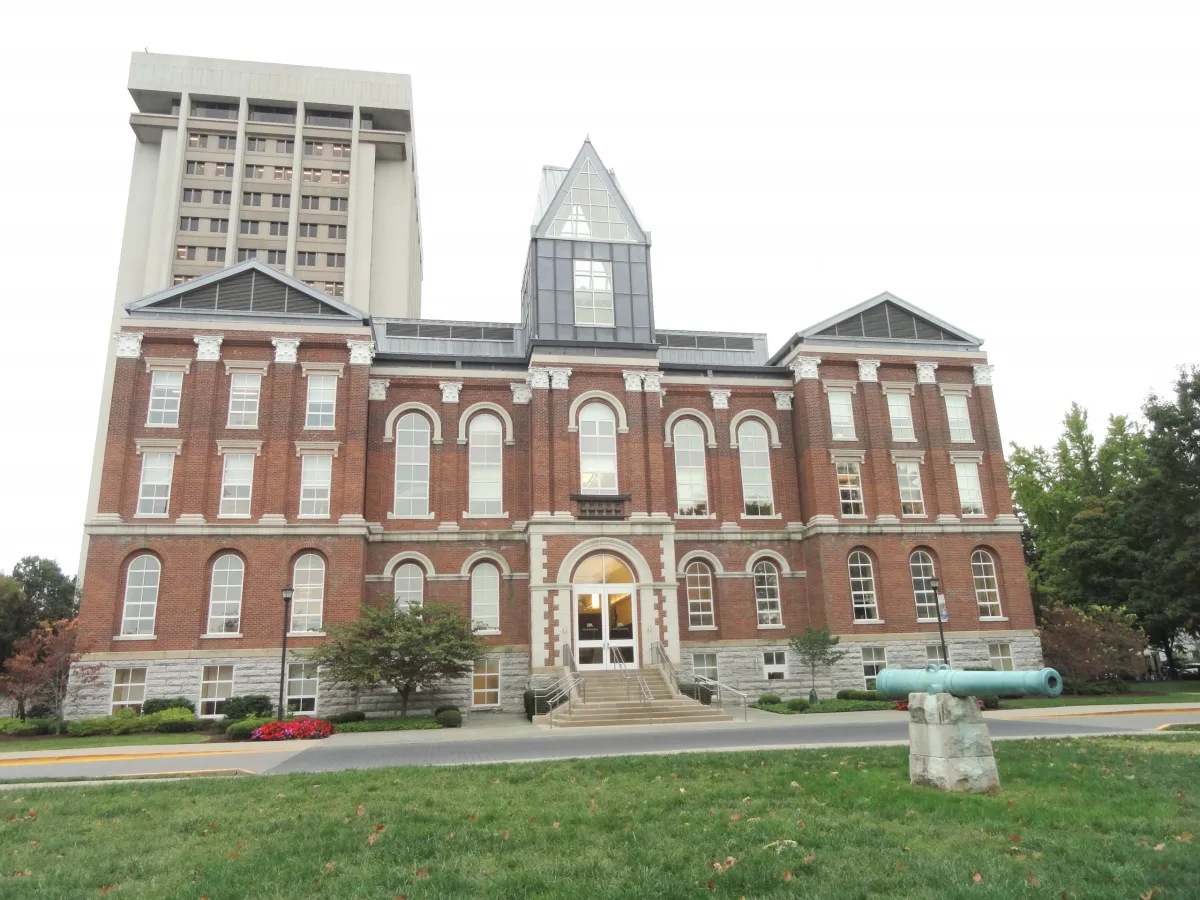 Photo: University of Kentucky, via uploads.concordia.net
What Pigg had actually done — without knowing it — was identify a category of natural phenomena that American law had no clean language for: transient, intangible, naturally occurring events that have measurable economic effects but belong to no one. Eclipses. Weather patterns. Tidal surges. The law would spend the next hundred years slowly developing frameworks to handle these things, mostly through environmental and aviation regulation rather than property ownership.
The Last Filing
Pigg's final recorded legal action on the matter came in 1876, more than two decades after his first attempt. He was in his sixties by then, still practicing law, still apparently convinced that someone needed to own the eclipse shadow and that someone might as well be him.
The filing was denied, as all the others had been. There's no record of him appealing it.
He died in 1881, having never successfully claimed a single square inch of darkness. His obituary in a Louisville paper described him as "a man of considerable legal acuity and some notable eccentricity," which is about as diplomatic as 19th-century journalism got.
But here's the footnote that makes the whole story feel genuinely strange: under current American law, the question of who owns the economic value of a solar eclipse's path — the tourism dollars, the broadcast rights, the commercial activity it generates — is still not entirely settled. Municipalities fight over eclipse tourism. Businesses trademark eclipse-related events. Landowners in the path of totality charge admission.
James Pigg never got his shadow. But the argument he was reaching for? We're still having it.