Foot Powder for Mayor: The Ad Campaign That Accidentally Won an Election
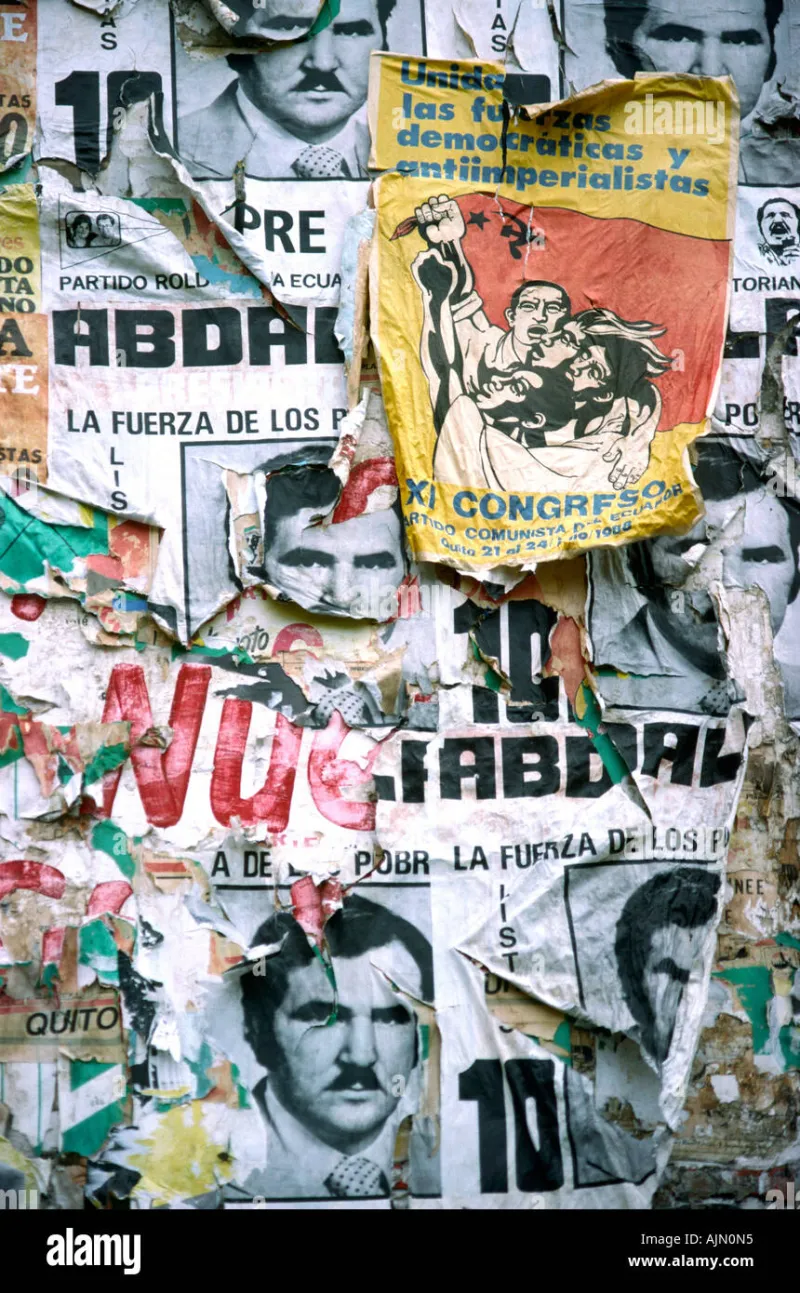
Photo: vintage Ecuador election poster 1960s political campaign, via c8.alamy.com
A Marketing Stunt That Went Sideways in the Best Possible Way
Most advertising campaigns aim for brand recognition. Maybe a catchy jingle. Maybe a slogan that sticks around longer than it should. The marketing team behind Pulvapies — an Ecuadorian foot powder with a name that translates, charmingly, to "dusty feet" — had modest ambitions. They wanted to sell foot powder. What they got instead was a seat on the city council.
In 1967, the residents of Picoaza, a small coastal municipality in Ecuador, were preparing for a local election. Turnout enthusiasm was, by most accounts, lukewarm. Candidates were uninspiring. Trust in local government had the structural integrity of wet cardboard. Into this political vacuum stepped a marketing agency with a sense of humor and absolutely no idea what was about to happen.
The campaign was simple. Posters went up around Picoaza urging citizens to "vote for any candidate, but if you want well-being and hygiene, vote for Pulvapies." Flyers landed in mailboxes. The slogan was catchy, the imagery was clean, and the pitch — however absurd — resonated with a population that had grown deeply cynical about the humans on the ballot.
When the votes were counted, Pulvapies had won.
The Anatomy of an Accidental Landslide
To understand how a foot powder defeats flesh-and-blood politicians, you have to understand the mood in Picoaza that year. Local governance had not exactly distinguished itself. Promises made during campaigns had a reliable habit of evaporating after election day. Voters were tired, skeptical, and — apparently — ready to make a point.
The Pulvapies campaign gave them the perfect vehicle. Writing in the brand name on a ballot was simultaneously a protest vote, a joke, and a genuine expression of frustration. It required almost no commitment. You weren't pledging loyalty to a platform or a person. You were, in a very real sense, telling the political establishment exactly what you thought of them — and doing it with a product designed to eliminate odor.
What the marketing team had stumbled onto, without meaning to, was a perfect storm of voter disillusionment, comedic timing, and collective action. Enough people independently decided that voting for foot powder was funnier — and more satisfying — than voting for any of the actual candidates. And when enough people make the same joke at the same time, democracy does what democracy does: it counts the votes.
Pulvapies won a seat on the municipal council. The product, to the considerable relief of its manufacturer, could not actually show up to govern.
What Happens When the Winner Can't Take Office
Here's where the story shifts from funny to genuinely fascinating. Ecuadorian electoral law at the time had not, understandably, anticipated the possibility of a consumer product winning public office. There was no clean legal mechanism for simply voiding the result. The votes were real. The count was legitimate. The winner was a talcum-based foot treatment.
Local officials scrambled. The manufacturer of Pulvapies — who had presumably been thrilled about the free publicity right up until the moment it became a constitutional crisis — found themselves in the awkward position of being responsible for a winning candidate who could not be sworn in, could not attend meetings, and could not, in any practical sense, draft municipal policy.
The seat was eventually left vacant and the matter resolved through administrative channels, but not before the story had spread well beyond Ecuador's borders. International newspapers picked it up. It became a minor sensation — a perfect parable about voter frustration dressed up as a comedy sketch.
Why This Story Still Matters
It would be easy to file the Pulvapies election under "amusing historical footnote" and move on. But there's something genuinely instructive buried inside the absurdity.
The citizens of Picoaza weren't stupid. They weren't confused. They knew exactly what they were doing when they wrote in a foot powder brand on their ballots. They were communicating something that the standard democratic process gave them no clean way to express: that none of the available options were acceptable, and that the system itself had failed to produce candidates worthy of their trust.
Protest votes are nothing new. People have been casting ballots for fictional characters, dead candidates, and write-in jokes for as long as democracies have existed. But the Pulvapies election is unusual because the joke actually worked. The protest reached critical mass. Enough voters participated in the bit simultaneously that it produced a genuine, countable, legally awkward result.
In that sense, it's less a story about a foot powder and more a story about what happens when a population runs out of patience — and finds a creative outlet for that frustration.
The Legacy of a Very Clean Political Upset
Pulvapies never served its term. The manufacturer did not hire a political consultant or draft a governing platform. The foot powder remained, as foot powders do, on pharmacy shelves, quietly doing its job.
But the election of 1967 in Picoaza, Ecuador has never quite disappeared from the historical record. It surfaces periodically in political science discussions, in journalism about protest voting, and in conversations about the strange ways that democratic systems can be turned sideways by collective humor.
It's a reminder that elections are, at their core, expressions of what a community wants — or, sometimes, what it desperately doesn't want. And occasionally, the most honest thing a voter can say is: "None of the above. Give me the foot powder."
The residents of Picoaza said it. They said it loud enough to count. And somewhere in a pharmacy in Ecuador, the legacy of Pulvapies sits quietly on a shelf, the only consumer product in recorded history to have won a democratic election and declined to serve.