One Small Click for Democracy: How Texas Rewrote Election Law So an Astronaut Could Vote from Orbit
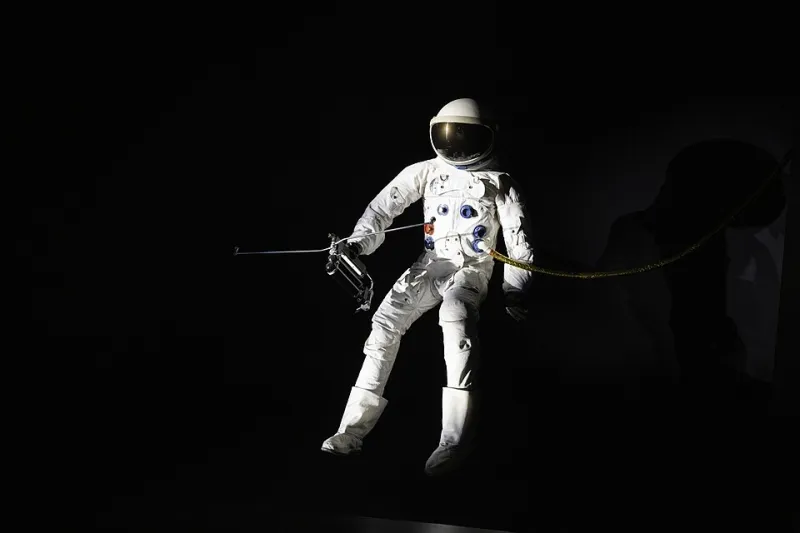
Photo: Wilfredor, CC0, via Wikimedia Commons
Houston, We Have a Ballot Problem
Let's set the scene. It's 1997. NASA astronaut David Wolf is living aboard the Russian Mir space station, conducting experiments, floating through zero gravity, and doing all the things you'd expect from someone hurtling around the planet at 17,500 miles per hour. Life is unusual by any measure.
 Photo: David Wolf, via www.eishockey.info
Then someone back home in Houston reminds him: there's an election coming up.
Wolf, a registered voter in Harris County, Texas, had every intention of fulfilling his civic duty. The problem was purely logistical — and also, honestly, kind of existential. He was in orbit. There was no polling place within 220 miles in any direction, and the closest one required surviving atmospheric reentry to reach. Standard absentee ballot rules required a fixed Earth address and a return mailing system that didn't involve a Soyuz capsule. Legally speaking, Wolf was stuck.
So Texas did what Texas does. It got creative.
The Legislature Looks Up
When NASA flagged the issue, Texas lawmakers moved with surprising speed. In 1997, the state legislature passed a bill specifically amending election code to allow astronauts on active spaceflight missions to cast absentee ballots electronically. The law was narrow, targeted, and gloriously specific — essentially a one-person fix for a problem that had never existed before.
The mechanics were worked out between NASA, the Harris County Clerk's office, and Johnson Space Center's communication teams. Wolf would receive a secure electronic ballot transmitted to the station. He'd fill it out. The completed ballot would be beamed back down to Earth through NASA's encrypted communication systems, where it would be processed like any other absentee vote.
Simple in concept. Historically unprecedented in every other way.
On November 4, 1997, David Wolf cast his ballot from low Earth orbit, becoming the first human being in history to vote from space. The election itself was local — nothing that would make national front pages under ordinary circumstances. But the act of voting? That was something else entirely.
Why This Is Weirder Than It Sounds
Here's what makes this story genuinely strange, beyond the obvious novelty of space-based democracy: the whole situation exposed a gap nobody had thought to close.
NASA had been sending Americans into space since 1961. Missions had lasted days, then weeks, then months. Astronauts had missed birthdays, anniversaries, and family milestones too numerous to count. But voting — that specific, constitutionally protected act — had apparently slipped through the cracks of mission planning until Wolf's particular scheduling conflict forced the issue.
Texas, to its credit, didn't drag its feet. The fix was clean, practical, and permanent. The 1997 amendment didn't sunset after Wolf came home. It stayed on the books, quietly waiting for the next time an astronaut needed it.
That next time came sooner than expected. As the International Space Station became operational and long-duration missions became routine, the question of voting from orbit stopped being a quirky one-off and became a recurring logistical consideration for NASA mission planners.
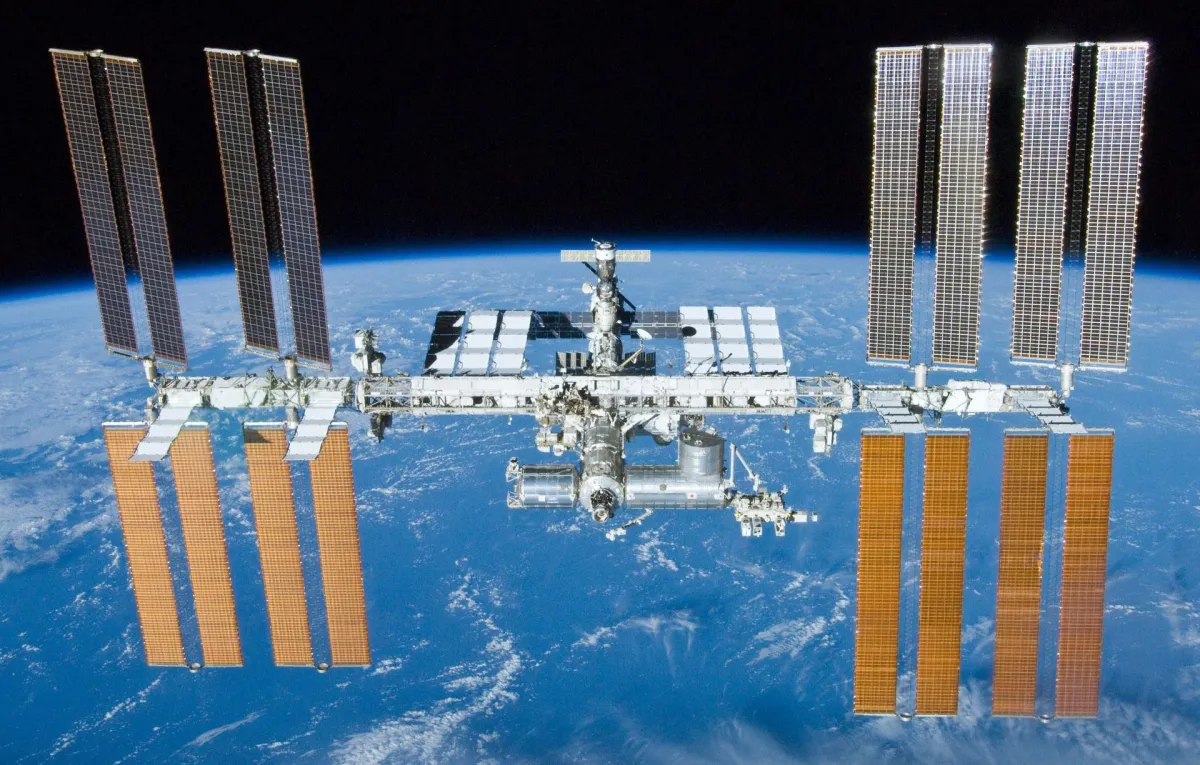 Photo: International Space Station, via thespacedevs-prod.nyc3.digitaloceanspaces.com
Democracy at Altitude
Since Wolf's historic ballot, multiple American astronauts have voted from the ISS, including Leroy Chiao, who cast his vote from 230 miles up during the 2004 presidential election. Each time, the process follows the framework Texas established in 1997 — a framework built, essentially, because one man's mission schedule overlapped with a Harris County local election.
There's something almost poetic about the whole thing. American democracy, for all its complexity and occasional dysfunction, managed to extend its reach beyond the atmosphere through a combination of one astronaut's civic commitment, a county clerk's problem-solving, and a state legislature willing to pass a law that most of its members probably never imagined they'd need.
The ballot itself wasn't deciding the fate of nations. It was a local Texas election — the kind of race that struggles to pull double-digit turnout on a good day. But Wolf showed up. From orbit. Which, when you think about it, puts the rest of us and our excuses about parking and long lines into a fairly uncomfortable perspective.
The Quiet Revolution Nobody Noticed
What's remarkable about this story isn't just the spectacle of it — though the spectacle is genuinely wonderful. It's the fact that a single logistical headache quietly expanded the definition of where democracy can happen.
Before 1997, the answer to "can you vote from space?" was simply no. There was no mechanism, no legal framework, no precedent. After 1997, the answer became yes — and the infrastructure to make it happen exists specifically because Texas lawmakers decided one astronaut's vote was worth the paperwork.
David Wolf came home from Mir in January 1998 after 128 days in space. He'd conducted scientific experiments, helped maintain the aging station, and, somewhere in the middle of all that, participated in a municipal election 220 miles below his feet.
Not bad for a Tuesday.