The Forgotten War That Outlasted 13 U.S. Presidents and Ended with a Handshake
When Paperwork Becomes a Three-Century Problem
In the annals of diplomatic blunders, few can match the sheer absurdity of a war that lasted longer than the entire existence of the United States—not because anyone was actually fighting, but because nobody remembered to officially end it.
The year was 1651, and England was in the throes of civil war. Oliver Cromwell's forces were mopping up the last Royalist strongholds, including the remote Isles of Scilly, a cluster of tiny islands off the coast of Cornwall. The Dutch, ever the opportunists, had been supporting the Royalists with naval raids and supply runs to these far-flung outposts.
 Photo: Oliver Cromwell, via assets.mycast.io
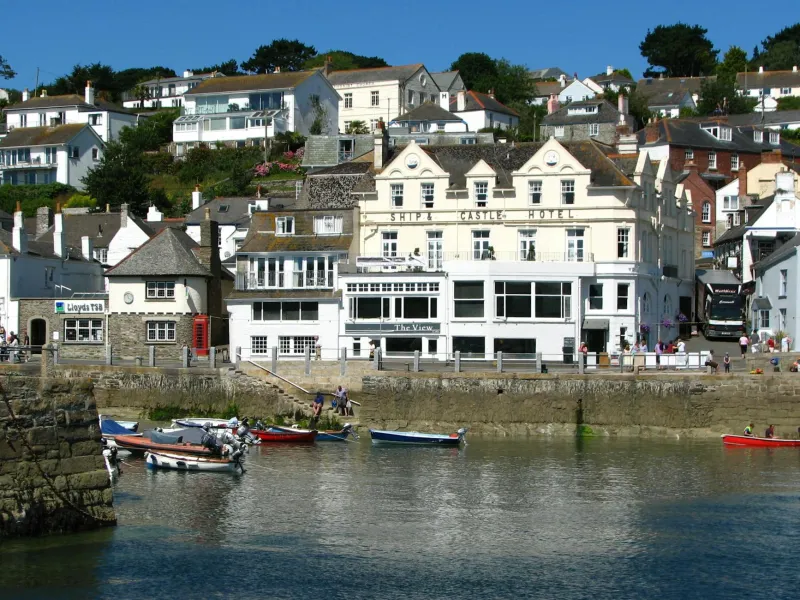
 Photo: Isles of Scilly, via www.fiat.co.uk
When Admiral Maarten Tromp arrived with his Dutch fleet to harass Cromwell's ships around the Scillies, he found himself in an unusual situation. The main war was winding down, but these islands were still technically hostile territory. So, with the bureaucratic precision that would make any government clerk proud, Tromp formally declared war on the Isles of Scilly on March 30, 1651.
 Photo: Maarten Tromp, via colordrop.io
The War Nobody Fought
What followed was perhaps history's most anticlimactic military campaign. The Dutch fleet sailed around the islands for a few months, occasionally exchanging cannon fire with Royalist positions, but never actually landed or engaged in any serious combat. When Cromwell's forces finally took control of the Scillies later that year, the Dutch simply sailed away.
The English Civil War officially ended in 1651, and by 1654, England and the Dutch Republic had signed the Treaty of Westminster, formally ending hostilities between the two nations. Diplomats shook hands, documents were signed, and everyone went home satisfied that peace had been restored.
Everyone, that is, except for the 2,000 residents of the Isles of Scilly, who had apparently been forgotten entirely.
The Bureaucratic Black Hole
For the next three centuries, while empires rose and fell, while America fought its Revolution and Civil War, while two World Wars reshaped the globe, the tiny Isles of Scilly remained technically at war with the Netherlands. Not that anyone noticed.
The islands went about their business—farming, fishing, and welcoming the occasional tourist—completely oblivious to their unique status as Europe's longest-running combat zone. The Dutch, for their part, seemed equally unaware that they were still technically at war with a collection of islands whose combined population wouldn't fill a small-town high school gymnasium.
This might have continued indefinitely if not for Roy Duncan, a local historian and chairman of the Isles of Scilly Council, who in 1985 stumbled across this remarkable oversight while researching the islands' history. Duncan discovered that while England and the Netherlands had made peace decades ago, no one had bothered to include the Scillies in the treaty.
Diplomacy Gets a Do-Over
Rather than simply ignoring this historical curiosity, Duncan decided to do something about it. He contacted the Dutch Embassy in London, explaining the situation with what one can only imagine was a mixture of embarrassment and amusement.
The Dutch response was characteristically pragmatic and good-humored. Ambassador Jonkheer Huydecoper agreed that this 334-year-old oversight needed correction and announced he would personally travel to the Scillies to sign a formal peace treaty.
On April 17, 1986, Ambassador Huydecoper arrived on St. Mary's, the largest of the Scilly Islands, for what must rank as one of history's most unusual diplomatic missions. In a ceremony attended by local officials, curious residents, and bemused journalists, he formally signed a declaration of peace, officially ending the longest war in recorded history.
The Aftermath of Peace
The signing ceremony was refreshingly brief and cordial—a stark contrast to the typical pomp and circumstance of international diplomacy. There were no reparations to discuss, no prisoners to exchange, no territories to redraw. Just a simple acknowledgment that sometimes, bureaucracy can create the most absurd situations imaginable.
The Dutch ambassador reportedly joked that he was relieved the Scilly Islanders hadn't been charging interest on 335 years of unpaid war reparations. Local officials, equally amused, assured him that they harbored no hard feelings about the extended conflict.
Lessons from the World's Politest War
The Scilly-Dutch War serves as a perfect reminder that sometimes the most extraordinary stories are hiding in plain sight, waiting for someone curious enough to dig through dusty archives and question why things are the way they are.
It also demonstrates the peculiar power of bureaucratic oversight. In an age when we worry about government surveillance and digital tracking, it's oddly comforting to know that sometimes, entire wars can slip through the cracks simply because someone forgot to file the right paperwork.
Today, relations between the Netherlands and the Isles of Scilly are presumably excellent, though one suspects that local officials now keep much better track of their international commitments. And somewhere in the Dutch Foreign Ministry archives sits what might be the most unnecessary peace treaty ever signed—proof that sometimes, the strangest truths are the ones that take three centuries to discover.