The Fire That Burned Down Chicago and Accidentally Built the Safest Cities in America
When Disaster Becomes Innovation
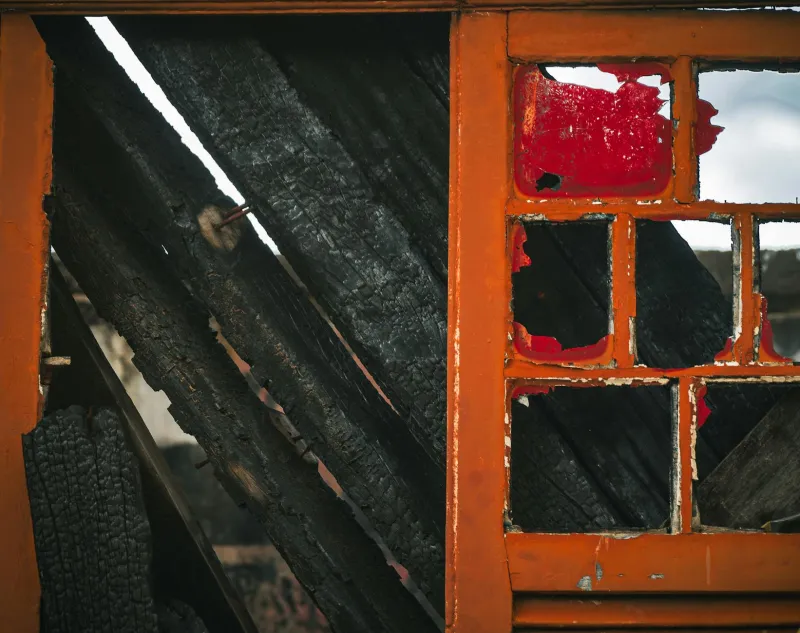
On the evening of October 8, 1871, a small fire started somewhere in Chicago's West Side—exactly where, nobody knows for certain, though Mrs. O'Leary's cow has been taking the blame for over 150 years. What began as a minor blaze in a working-class neighborhood would, within 48 hours, consume over 17,000 buildings, leave 100,000 people homeless, and kill at least 300 Chicagoans.
But hidden within this urban catastrophe was an accidental discovery that would revolutionize how Americans built their cities and save countless lives for generations to come. The hero of this story wasn't a firefighter or a politician—it was an architect who nearly burned to death in his own office and emerged from the ashes with ideas that would change everything.
The Night Chicago Learned to Fear Fire
William Le Baron Jenney was working late in his architectural firm on October 8 when he noticed an orange glow creeping across the horizon. By the time he realized the magnitude of the approaching inferno, it was almost too late to escape. Jenney barely made it out of his building before the flames consumed his office, destroying years of architectural plans and leaving him watching helplessly as the city he'd helped design turned into a hellscape.
 Photo: William Le Baron Jenney, via cdn.slidesharecdn.com
The fire's behavior that night defied everything architects thought they knew about urban construction. Buildings that should have been fireproof—brick structures with supposedly safe designs—crumbled like matchsticks. The flames jumped across streets, leaped over firebreaks, and turned Chicago's business district into what survivors described as "a vision of hell on earth."
As Jenney stood in the smoldering ruins of his career, watching families dig through the rubble of their homes, he made a decision that would define the rest of his life: he would figure out how to build cities that couldn't burn.
The Accidental Laboratory
The Great Chicago Fire created something unprecedented in American history: a blank slate. Nearly the entire downtown core had been obliterated, creating a massive urban laboratory where architects could test new theories about fireproof construction without having to work around existing buildings.
Jenney threw himself into studying exactly how the fire had behaved. He walked the burned districts, documenting which materials had survived and which had failed catastrophically. He interviewed survivors, collected samples of twisted metal and cracked stone, and began developing theories about how heat and flame moved through different building materials.
What he discovered challenged everything the architectural profession believed about fire safety. Traditional "fireproof" materials like cast iron, which looked strong and durable, had actually made the fire worse by conducting heat and warping under extreme temperatures. Meanwhile, some experimental materials that seemed flimsy had performed surprisingly well.
The Birth of the Skyscraper
Jenney's fire research led him to a revolutionary conclusion: the safest buildings weren't necessarily the most solid-looking ones. Instead of relying on thick masonry walls that could crack and crumble in extreme heat, he began experimenting with steel frame construction that could flex without breaking.
His breakthrough came in 1885 with the Home Insurance Building, often considered the world's first true skyscraper. But the building's historic importance wasn't just its height—it was the fire-resistant steel frame construction that Jenney had developed directly from his Chicago Fire research.
 Photo: Home Insurance Building, via hooligans.cz
The building used a revolutionary system of steel beams and columns that could support enormous weight while remaining relatively immune to fire damage. The steel frame was protected by fireproof materials that Jenney had tested and refined based on his observations of which substances had survived the great fire.
The Ripple Effect Across America
Jenney's fire-resistant construction techniques didn't stay in Chicago. As other cities witnessed the devastation that urban fires could cause—Boston's Great Fire of 1872, the Baltimore Fire of 1904—they began adopting the building codes and construction methods that had emerged from Chicago's ashes.
The impact was dramatic and measurable. Cities that adopted Chicago-style fire codes saw their fire death rates plummet. New York, San Francisco, and other major urban centers began requiring steel frame construction for large buildings, fireproof stairwells, and the kind of compartmentalized design that could contain fires rather than allowing them to spread.
By 1900, American cities were fundamentally safer places to live than they had been before the Chicago Fire, not despite the disaster but because of it.
The Man Who Nearly Died Saving Lives
The irony of Jenney's story is almost too perfect to believe. The man who would become known as the "Father of the American Skyscraper" and save thousands of lives through fireproof construction had almost died in the very fire that inspired his work.
Jenney's escape from his burning office building on that October night in 1871 was so narrow that he later said he could feel the heat from the flames on his back as he ran down the stairs. If he had stayed at his desk just five minutes longer, he might not have survived to revolutionize urban construction.
The Accidental Revolution
What makes Jenney's story so remarkable is how completely unintentional his contribution was. He wasn't trying to invent the skyscraper or revolutionize urban planning—he was simply trying to figure out how to build structures that wouldn't burn down.
But his methodical, almost obsessive analysis of the Chicago Fire's behavior led him to insights that transformed not just architecture but the entire concept of urban safety. His steel frame construction techniques became the foundation for modern city building, making possible the dense urban environments that define American cities today.
Legacy Written in Steel and Stone
Today, every major city in America bears the invisible mark of William Le Baron Jenney's near-death experience in 1871. The fire codes that protect modern buildings, the steel frame construction that allows skyscrapers to soar safely into the sky, and the compartmentalized design that prevents fires from spreading through entire city blocks all trace their origins back to one man's determination to understand why Chicago burned so completely.
The Great Chicago Fire destroyed a city, but it accidentally built something far more valuable: the knowledge of how to construct urban environments that could protect their inhabitants from the kind of catastrophe that had nearly claimed Jenney's life. Sometimes the most important discoveries come not from careful planning, but from surviving disaster and having the curiosity to ask: "How do we make sure this never happens again?"