
When Legal Technicalities Create Empires
In 1931, Reno, Nevada was a dusty railroad town with tumbleweeds, mining claims, and not much else. By 1945, it was the undisputed divorce capital of America, processing more marriage dissolutions than any other city in the country. The transformation happened because of something so mundane it sounds made up: state legislators chose six weeks as a residency requirement instead of six months.
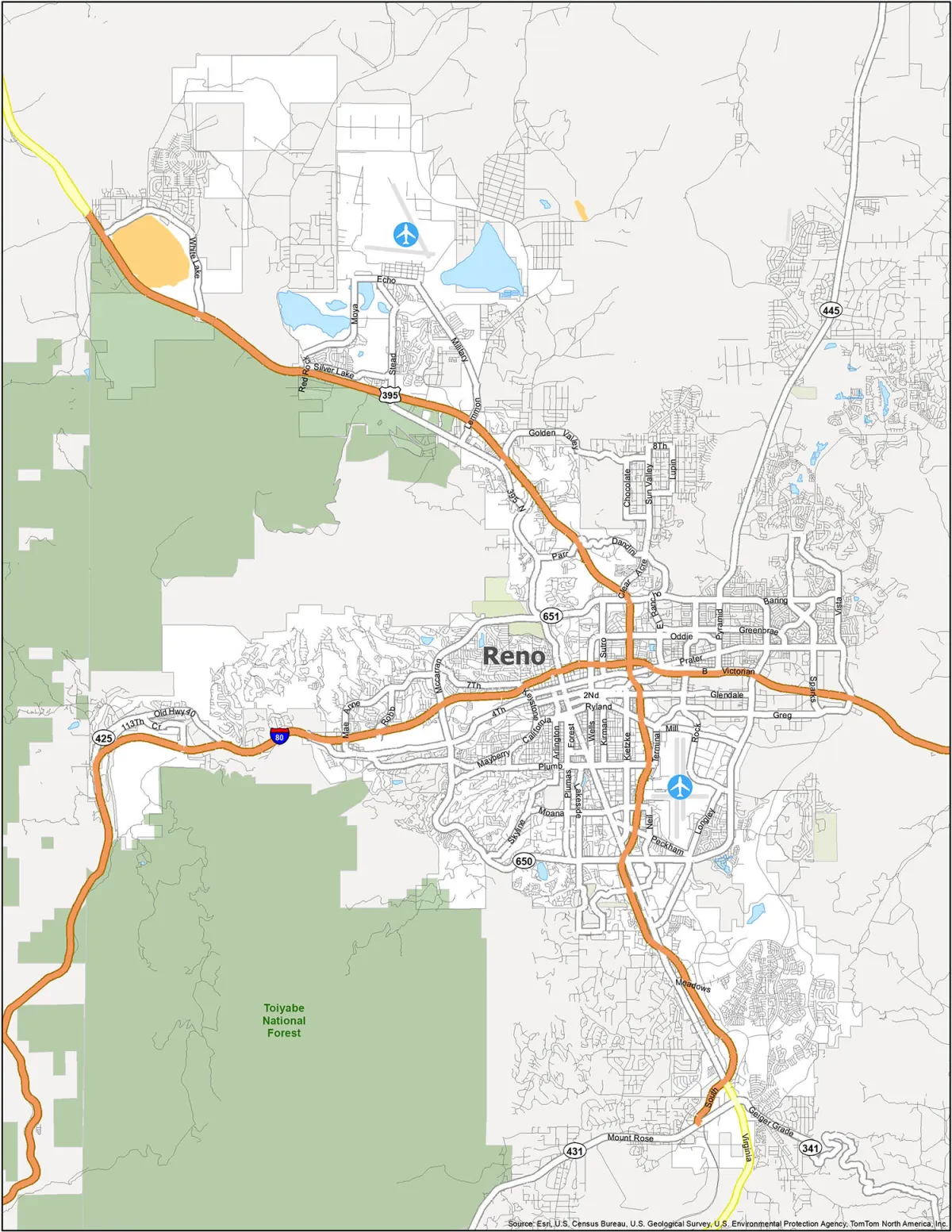 Photo: Reno, Nevada, via gisgeography.com
That single digit difference — six weeks versus the years-long waits required in other states — accidentally created an entire industry built on legal loopholes and human heartbreak.
The Accidental Discovery
The story begins with Nevada's desperate attempt to attract residents to a state that most Americans viewed as an inhospitable wasteland. In the early 1900s, Nevada lawmakers shortened residency requirements to encourage settlement, figuring that if people had to stick around for six weeks to establish legal residency, some might decide to stay permanently.
They had no idea they were about to revolutionize American divorce.
The first wealthy East Coast socialites discovered the Nevada loophole in the 1910s, when getting divorced in states like New York required proving adultery — often through staged scenarios involving private detectives and hotel rooms. Nevada, by contrast, accepted "mental cruelty" as grounds for divorce, a wonderfully vague term that could mean anything from actual abuse to "he leaves his socks on the floor."
Word spread through high society like wildfire. Why endure years of legal battles and public humiliation when you could spend six weeks in Nevada and walk away with a clean divorce decree?
Building an Industry on Broken Marriages
Reno's civic leaders quickly realized they had stumbled onto something remarkable: a recession-proof industry based on human misery. Divorce, unlike mining or agriculture, never went out of season. There would always be unhappy marriages, and there would always be people wealthy enough to pay for a quick exit.
The city embraced its new identity with entrepreneurial enthusiasm. Hotels began advertising "divorce packages" that included room, board, and legal services. The Riverside Hotel became famous for its "Six Weeks to Freedom" marketing campaign, complete with divorce-themed cocktails and entertainment designed specifically for soon-to-be-single women.
 Photo: Riverside Hotel, via www.advancedairsystem.com
Dude ranches sprouted around Reno's outskirts, offering horseback riding, square dancing, and therapeutic activities for wealthy divorcees waiting out their residency periods. These weren't just accommodations — they were carefully crafted experiences designed to make divorce feel like a liberation vacation rather than a legal necessity.
The Divorce Colony Culture
By the 1930s, Reno had developed what observers called "divorce colony" culture. Wealthy women from across the country would arrive with steamer trunks and settle in for their mandatory six-week stays, forming temporary communities of soon-to-be-single socialites.
These divorce colonies had their own social hierarchies, gossip networks, and entertainment circuits. Local newspapers published society pages dedicated entirely to divorce colony news, tracking arrivals, departures, and the social activities of prominent temporary residents.
The phenomenon created some deliciously absurd situations. Women who had never worked a day in their lives suddenly found themselves living independently for six weeks, often for the first time ever. Many discovered they actually enjoyed the freedom, leading to what sociologists later called "the Reno effect" — women who came for quick divorces but left with permanently changed perspectives on independence.
The Economic Miracle
The numbers were staggering. By 1940, divorce-related tourism was bringing millions of dollars annually into Nevada's economy. Hotels, restaurants, shops, and entertainment venues all thrived on the steady stream of wealthy women with time to kill and money to spend.
Reno's population exploded as service workers flocked to the city to support the divorce industry. Lawyers specializing in Nevada divorce law became some of the wealthiest professionals in the West. Even taxi drivers and bellhops developed expertise in the emotional needs of divorce clients.
The city invested divorce profits into infrastructure improvements, building better roads, expanding utilities, and constructing public facilities that benefited all residents. Essentially, Reno used broken marriages to build itself into a modern city.
The Unintended Social Revolution
What started as a legal technicality accidentally became a catalyst for changing American attitudes toward divorce. Before Reno, divorce carried enormous social stigma and was practically impossible for most people to obtain. The Nevada system normalized divorce by making it accessible, efficient, and even somewhat fashionable.
Wealthy women who had divorced in Reno returned to their home communities with stories of empowerment and independence. They had seen that life after divorce was not only possible but potentially liberating. These women became informal ambassadors for changing social attitudes toward marriage and divorce.
The Ironic Ending
Here's where the story takes its most ironic turn: Nevada eventually tightened its divorce laws in response to criticism that it was undermining American family values. By the 1960s, other states had liberalized their own divorce statutes, eliminating Reno's competitive advantage.
But the tourism infrastructure built on divorce money didn't disappear — it pivoted to gambling. The hotels, restaurants, and entertainment venues that had served divorce colonies seamlessly transitioned to serving gamblers and tourists. Las Vegas, in particular, inherited the tourism model that Reno's divorce industry had pioneered.
 Photo: Las Vegas, via kellystilwell.com
So in a roundabout way, America's modern casino tourism industry owes its existence to a legal loophole about marriage dissolution. The glittering entertainment complexes of Las Vegas are the direct descendants of Reno's divorce ranches.
The Legacy of Legal Loopholes
Reno's accidental transformation into America's divorce capital illustrates how seemingly minor legal differences between states can create massive unintended consequences. One legislative decision — choosing six weeks instead of six months — reshaped an entire city's economy and accidentally contributed to a national social revolution.
The story also demonstrates how quickly American entrepreneurs can identify and exploit legal arbitrage opportunities. Within a decade of discovering the Nevada loophole, enterprising business owners had built an entire industry around it, complete with marketing campaigns, specialized services, and infrastructure investments.
Today, Reno still calls itself "The Biggest Little City in the World," a slogan that dates back to its divorce capital days. The city that accidentally discovered it could profit from failed marriages ultimately learned that sometimes the best business opportunities come from solving problems nobody realized they had.