The Olympic Sport That Kept Killing People—Until Everyone Just Lost Interest
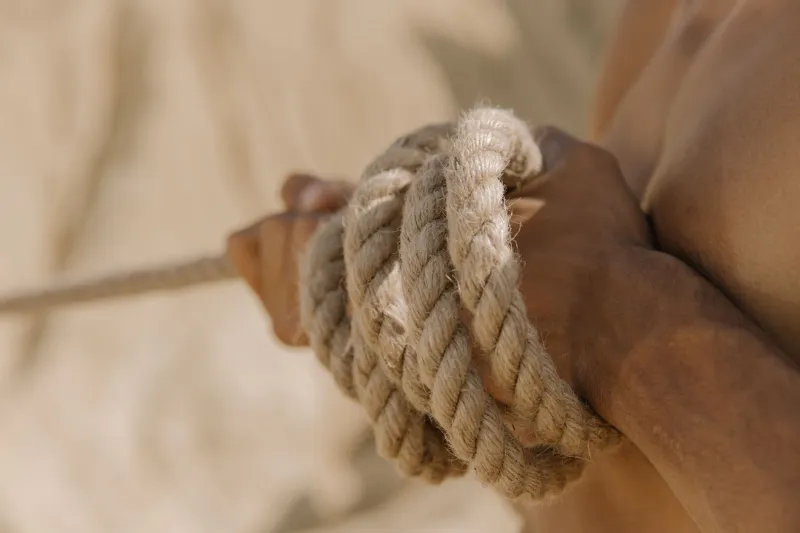
The modern Olympic Games have always had a complicated relationship with danger. Early editions of the Games included events that would be laughed out of any contemporary sports committee meeting—or quietly flagged by a liability lawyer before the meeting even started. But there's one chapter of Olympic history that manages to be both genuinely horrifying and almost completely forgotten: the long, strange, bloody run of Olympic tug-of-war.
Wait, come back. This gets worse than you think.
A Legitimate Olympic Sport, Briefly
Tug-of-war was an official Olympic event from 1900 to 1920. Six Games, five cities, and an era when the International Olympic Committee was still figuring out what exactly counted as a sport worth including. (The 1900 Games also featured live pigeon shooting, so the bar was not especially high.)
On the surface, tug-of-war seems harmless enough—two teams grab a rope and pull. But the early 20th century version of competitive tug-of-war was a different animal. Teams trained with brutal intensity. The rope was thick and heavy. Competitions could last for an agonizing length of time, with competitors locked in static exertion that put enormous strain on their backs, shoulders, and hands. Rope burns were routine. Muscle tears were common. And in a handful of documented cases, the injuries were severe enough to end careers—or worse.
The 1908 London Games and the Controversy That Should Have Been a Warning
The most famous Olympic tug-of-war incident didn't involve a death but did involve a scandal that, in retrospect, reads as a preview of everything wrong with the event.
At the 1908 London Olympics, the American team arrived ready to compete—and then refused to pull. The problem was footwear. The British teams showed up wearing heavy police and military boots with steel-reinforced soles, which gave them a drastically superior grip on the ground. The Americans claimed this was cheating. The British officials, who were also running the Games, said the boots were perfectly legal. The Americans walked out.
The British team won the gold, the silver, and the bronze. The Americans filed a formal protest. The protest went nowhere. The boots stayed.
It was petty and farcical—but it also illustrated something important: the sport had no real standardization, no serious oversight, and no coherent rules about what constituted fair competition. That same absence of oversight applied to safety.
What Was Actually Happening to the Competitors
To understand why tug-of-war was dangerous in a way that its barnyard reputation obscures, you have to understand what competitive pulling actually does to a human body.
The static, sustained force required in high-level tug-of-war generates extraordinary pressure on the lumbar spine. Athletes in prolonged matches reported numbness in their extremities, involuntary muscle failure, and in severe cases, herniated discs that ended their athletic careers. The rope itself—thick, rough, and heavy—caused deep lacerations when it slipped or snapped. And the catastrophic scenario everyone feared was a rope failure under full tension, which could send both teams sprawling violently backward.
Rope failures weren't theoretical. They happened. When a rope under several thousand pounds of combined force snaps, the recoil is violent enough to cause serious blunt-force trauma. Several competitors in non-Olympic international competitions during this era were hospitalized after rope breaks. The Olympic events used higher-quality rope, but the physics didn't change.
Beyond the rope itself, the sheer physical demand of elite-level tug-of-war claimed competitors through cardiac stress. The sustained isometric exertion—holding maximum force without movement for minutes at a stretch—places extreme demands on the cardiovascular system, particularly in athletes who were not young men in peak condition. The early Olympic rosters included competitors well into their 40s.
The Real Reason It Disappeared
Here's where the story takes its genuinely strange turn. Tug-of-war wasn't removed from the Olympic program because the IOC finally reviewed the injury statistics and decided enough was enough. There was no safety audit, no committee review, no moment of institutional conscience.
It was dropped after the 1920 Antwerp Games simply because participation had collapsed. The sport had always been dominated by British, Scandinavian, and a handful of other European nations. By 1920, fewer countries were bothering to send teams. The event was becoming an awkward formality rather than a genuine competition, and the IOC quietly removed it from the roster for the 1924 Paris Games.
No fanfare. No explanation. No acknowledgment that the sport had spent two decades injuring the people who played it.
The Forgotten Casualty List
The full accounting of tug-of-war-related Olympic injuries was never formally compiled—which is itself a revealing fact. Record-keeping around athlete welfare at the early Games was essentially nonexistent. What we know comes from newspaper accounts, national Olympic committee records, and the occasional memoir.
What those sources suggest is that the sport's discontinuation was, accidentally, the right call for the wrong reasons. The IOC wasn't trying to protect athletes. They were trimming a program that had grown unwieldy and poorly attended. The athletes got safer as a side effect.
Tug-of-war still exists as a competitive sport today. There's an international federation, world championships, and a genuine global community of practitioners. They use modern rope, standardized equipment, and actual safety protocols.
But for twenty years, it was an Olympic sport that nobody was really watching over—and the competitors paid the price while the crowd looked on.