The Post Office at the End of the World
Imagine running a post office where your nearest neighbor lives 47 miles away, supply boats arrive twice a year if you're lucky, and your primary customers are passing ships that may or may not stop. Now imagine doing that job perfectly for 27 years without a single complaint.
That's exactly what August Rydholm accomplished at Stannard Rock Light Station, a lighthouse so remote that other lighthouse keepers called it "the loneliest place in America."
 Photo: August Rydholm, via www.norf.org
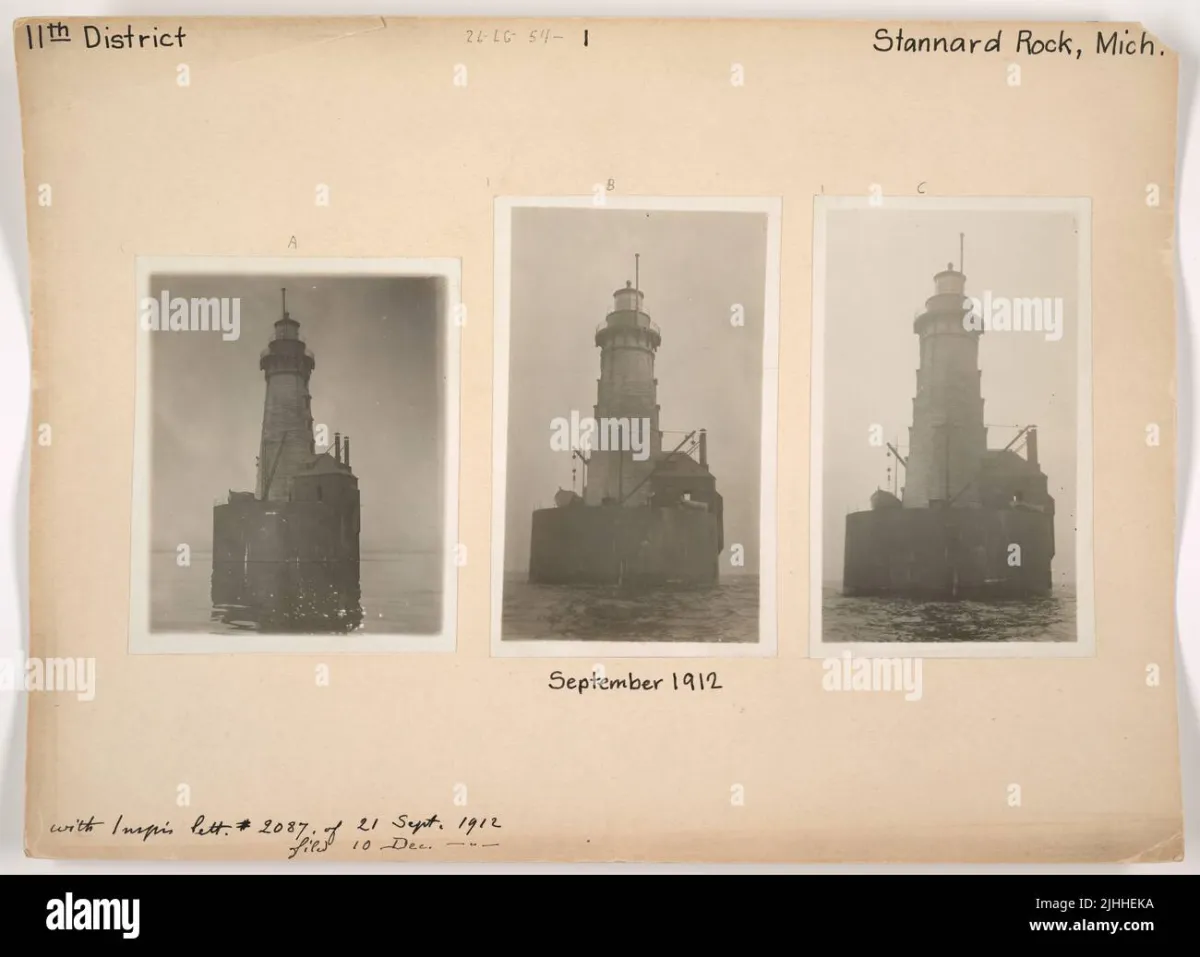 Photo: Stannard Rock Light Station, via c8.alamy.com
The Lighthouse That Shouldn't Have Been a Post Office
Stannard Rock sits 24 miles northeast of the Keweenaw Peninsula in Lake Superior, marking a dangerous reef that had claimed dozens of ships. When the lighthouse was completed in 1882, the U.S. Lighthouse Service faced an unexpected problem: how to get mail to and from the most isolated outpost in their system.
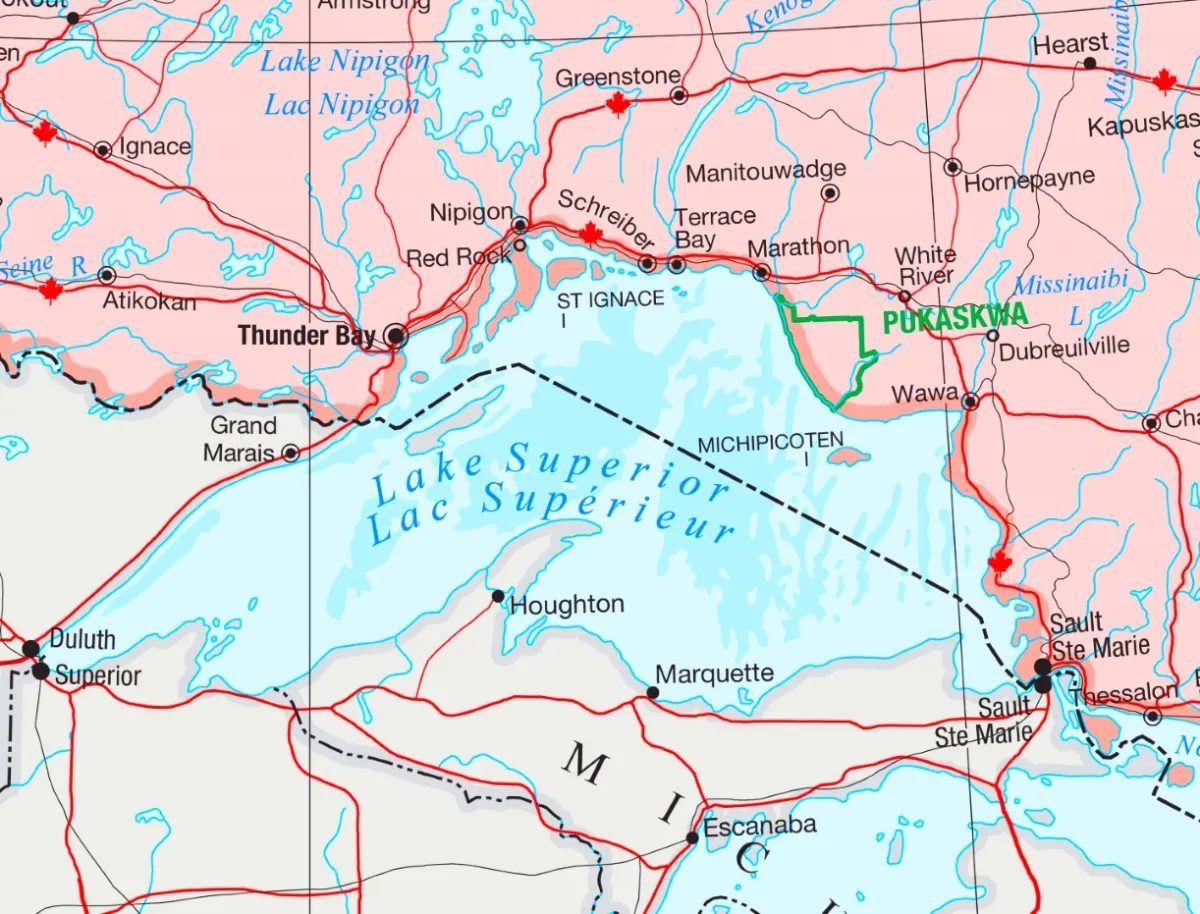 Photo: Lake Superior, via ontheworldmap.com
The solution seemed simple enough—designate the lighthouse keeper as postmaster and let passing ships handle delivery. What they didn't anticipate was hiring August Rydholm, a Swedish immigrant whose approach to mail service bordered on the supernatural.
Rydholm took over lighthouse duties in 1902, and with them, postal responsibilities that would have broken most men. His post office consisted of a wooden cabinet bolted to the lighthouse wall and a logbook where he recorded every piece of mail that passed through his hands.
The System That Defied Logic
Stannard Rock's location made normal postal service impossible. During shipping season (roughly May through October), freighters and passenger steamers might pass within signaling distance a few times per week. During winter, the lighthouse was completely cut off from the outside world for months at a time.
Rydholm developed a system that seemed more like magic than mail service. He memorized the schedules of every regular ship route on Lake Superior, tracked weather patterns to predict which vessels might seek shelter near his lighthouse, and maintained detailed records of which captains were reliable for mail delivery.
When ships passed, Rydholm would signal with flags or lantern flashes, indicating whether he had outgoing mail. Incoming mail was transferred by small boat, weather permitting, or sometimes thrown in waterproof pouches when seas were too rough for safe approach.
The Obsession That Built a Legend
What transformed Rydholm from an isolated postal worker into a maritime legend was his absolute refusal to accept that geography made perfect service impossible. He treated every piece of mail—whether a letter from a lonely sailor's wife or business correspondence for mining companies—as a sacred trust.
Rydholm's logbooks, preserved in the Great Lakes Maritime Museum, reveal the extent of his dedication. He recorded not just postmarks and destinations, but weather conditions, ship names, captain names, and estimated delivery times. He tracked which vessels were most reliable for different routes and developed backup plans for when primary carriers were delayed.
During one particularly brutal winter in 1918, Rydholm was cut off from November through April with a bag of outgoing Christmas mail. Rather than wait for spring, he spent three months crafting a detailed delivery plan, organizing letters by destination and identifying which ships would be most likely to reach each port quickly when navigation resumed.
The Mail Must Go Through
Rydholm's reputation for reliability became so well-known among Great Lakes mariners that ship captains began deliberately altering their routes to pass near Stannard Rock. They knew that mail handed to the lighthouse keeper would reach its destination faster and more reliably than letters posted at major ports.
The U.S. Postal Service initially viewed Stannard Rock as a necessary inconvenience—a remote outpost that handled maybe a dozen pieces of mail per week. But by 1915, postal inspectors realized something extraordinary was happening. Despite operating under impossible conditions, Rydholm's station had achieved a perfect delivery record.
Postal Inspector William Morrison visited Stannard Rock in 1923 and later wrote: "I have inspected post offices in major cities that could not match the precision and reliability demonstrated by Keeper Rydholm. His methods, adapted to unique circumstances, represent postal service at its highest ideal."
The Training Manual That Never Was
Word of Rydholm's success reached postal headquarters in Washington, where officials quietly began studying his methods. His techniques for tracking irregular schedules, maintaining detailed delivery records, and building relationships with transportation providers became informal training material for postmasters in other remote locations.
The irony was perfect: the most isolated post office in America was teaching efficiency lessons to the entire postal system.
Rydholm's innovation extended beyond logistics. He developed a weather prediction system based on lake behavior that allowed him to anticipate which ships would seek shelter at Stannard Rock. He learned to read shipping manifests and cargo schedules, predicting which vessels would be most motivated to maintain tight schedules.
The End of an Era
In 1929, the Lighthouse Service automated Stannard Rock Light, ending Rydholm's tenure as both keeper and postmaster. His replacement was a rotating crew system with no postal responsibilities—mail service to the lighthouse simply ended.
Rydholm's final logbook entry read: "27 years, 14,847 pieces of mail processed, zero complaints, zero lost items. The lighthouse serves ships. The post office served people. Both duties completed satisfactorily."
The Legacy of Impossible Service
August Rydholm proved that perfect postal service was possible even in impossible circumstances. His 27-year record stands as a testament to what one obsessively dedicated person could accomplish when they treated an impossible job as a sacred responsibility.
Today, Stannard Rock Light operates automatically, monitored by GPS and maintained by helicopter visits. The tiny post office cabinet still hangs on the lighthouse wall, empty now except for a small plaque commemorating the man who proved that isolation was no excuse for imperfection.
In an age when next-day delivery seems miraculous, it's worth remembering the lighthouse keeper who spent three decades ensuring that every letter found its way home, no matter how far from civilization it started its journey.