The Farmer Who Plowed Up America's Archaeological Rulebook
When the Plow Hits History
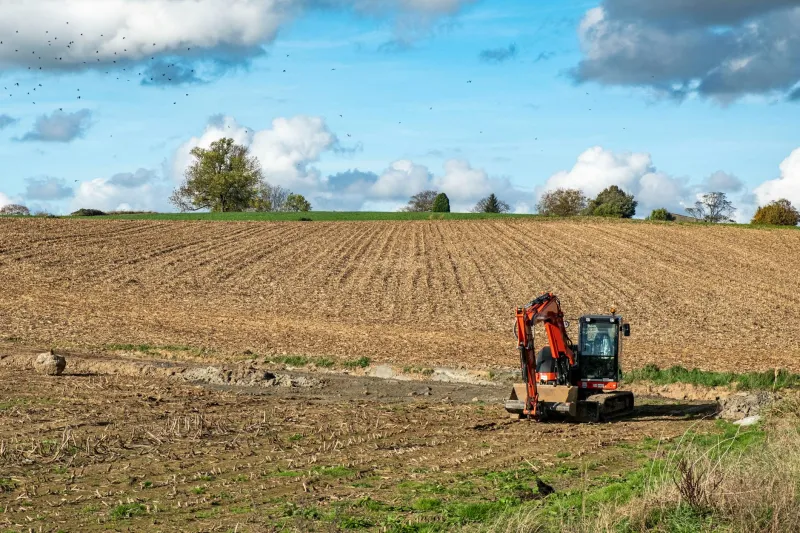
Tommy Higgins was thinking about corn prices, not ancient civilizations, when he fired up his tractor on that crisp April morning in 1987. The central Kentucky farmer had 40 acres of bottom land to prepare for planting, and the weather forecast promised rain later in the week. It was the kind of routine spring work that had occupied Higgins men on this same land for four generations.
Three hours later, Higgins would find himself at the center of one of the most significant archaeological discoveries in American history—and the most complicated legal battle he could never have imagined.
The trouble started in the south field, where his plow began turning up objects that definitely weren't rocks. First came fragments of pottery, then pieces of worked stone, and finally something that made Higgins shut off his tractor and climb down for a closer look: a human skull, weathered but unmistakably ancient, staring up from the fresh-turned earth.
The Discovery That Changed Everything
What Higgins had stumbled upon was nothing less than one of the largest intact Native American burial complexes ever found in North America. The site, which archaeologists would later determine dated back over 2,000 years, contained the remains of more than 1,200 individuals from what appeared to be a sophisticated pre-Columbian civilization.
But in 1987, Higgins knew none of this. He knew only that his spring plowing had turned into something far more complicated than preparing a cornfield. After staring at the skull for several long minutes, he did what any reasonable farmer would do: he called the county sheriff.
The sheriff called the state archaeologist. The state archaeologist called the University of Kentucky. The university called the federal government. And suddenly, Higgins' 40-acre cornfield became ground zero for a clash between property rights, scientific discovery, and cultural heritage that would echo through courtrooms and congressional hearings for the next decade.
 Photo: University of Kentucky, via www.bhdp.com
The Academic Gold Rush
Word of the discovery spread through archaeological circles with the speed of academic gossip, which is to say, very quickly. Within weeks, Higgins' farm was swarming with researchers, graduate students, and cultural resource management specialists, all eager to study what preliminary surveys suggested was an unprecedented find.
The burial complex appeared to represent multiple time periods and cultural groups, with grave goods that included elaborate pottery, copper ornaments, carved stone pipes, and shell beads that had traveled hundreds of miles from the Gulf Coast. Early radiocarbon dating suggested continuous use of the site for over 800 years, making it a potential treasure trove of information about pre-contact Native American life in the Ohio River Valley.
Dr. Margaret Chen, the University of Kentucky archaeologist who led the initial survey, described it as "the kind of discovery that rewrites textbooks." The site promised to shed new light on trade networks, social organization, and burial practices among indigenous peoples who had left few written records of their sophisticated civilizations.
There was just one problem: nobody had bothered to ask Tommy Higgins if he wanted his cornfield to become an outdoor laboratory.
The Farmer Fights Back
Higgins, a soft-spoken man who preferred solving problems with work rather than words, found himself thrust into a legal and cultural maelstrom that seemed to grow more complicated by the day. University researchers wanted to excavate the entire site, a process that could take years and would permanently remove his most productive farmland from cultivation.
State officials invoked eminent domain provisions, arguing that the site's archaeological significance justified government intervention. Federal agencies cited the Archaeological Resources Protection Act, claiming jurisdiction over any artifacts found on the property.
Meanwhile, tribal representatives from across the region began arriving to assert their own claims to the remains. The Cherokee Nation, the Shawnee Tribe, and the Miami Tribe all presented historical evidence that their ancestors had lived in the area, making them the rightful heirs to the burial complex.
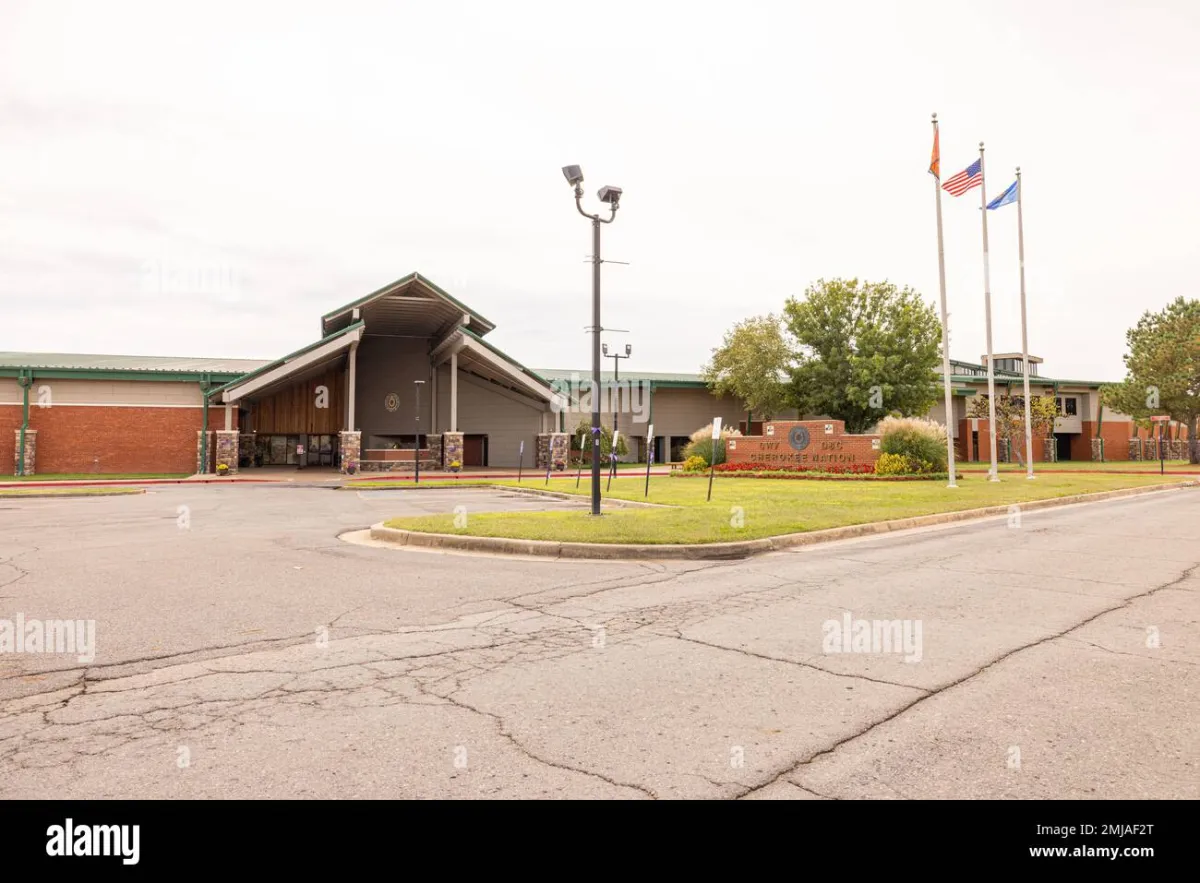 Photo: Cherokee Nation, via c8.alamy.com
Higgins hired a lawyer and dug in for what would become a seven-year legal battle. His position was simple: it was his land, inherited from his father and grandfather, and he had every right to farm it as he saw fit. If the government wanted to turn it into a research site, they could pay fair market value and buy it outright.
"I'm not against history," Higgins told reporters in one of his rare interviews. "But I've got a living to make, and corn doesn't plant itself."
The Cultural Stakes
For tribal representatives, the issue went far beyond archaeology or property rights. The remains in Higgins' field represented their ancestors, people who deserved proper burial and spiritual protection according to traditional customs that had been practiced for millennia.
Robert Hawk, a Cherokee spokesman, put it bluntly: "These are not specimens for study. They are our grandmothers and grandfathers, and they have been disturbed enough."
The tribal position was complicated by the fact that multiple groups claimed ancestral connections to the site, and historical records were unclear about which tribes had actually lived in the area during the relevant time periods. Archaeological evidence suggested the burial complex had been used by several different cultural groups over the centuries, making it impossible to assign clear ownership to any single modern tribe.
Academic Ambitions Meet Legal Reality
Meanwhile, the archaeological community watched nervously as their dream research site became a legal nightmare. The longer the court case dragged on, the more the site deteriorated. Weather, erosion, and occasional illegal artifact hunting by treasure seekers threatened to destroy irreplaceable evidence.
Dr. Chen and her colleagues argued that the scientific value of the site transcended individual property rights. "This is like finding the archaeological equivalent of King Tut's tomb in Kentucky," she testified during congressional hearings. "We have a responsibility to future generations to preserve and study this evidence of America's indigenous heritage."
But Higgins' lawyers countered that allowing the government to seize private property for archaeological research set a dangerous precedent that could affect landowners across the country. "If the federal government can take a man's farm because someone buried their ancestors there 2,000 years ago," argued his attorney, "then no property in America is truly safe from seizure."
The Compromise That Changed the Law
The resolution, when it finally came in 1994, satisfied nobody completely but established principles that would reshape American archaeology for decades to come. The Native American Graves Protection and Repatriation Act (NAGPRA), passed in 1990 partly in response to the Higgins case, provided a framework for resolving such disputes.
Under the final settlement, Higgins retained ownership of his land but agreed to allow limited archaeological study of the most significant portions of the burial complex. The federal government purchased development rights to 15 acres of the site, ensuring it would be preserved in perpetuity. Tribal representatives were given oversight authority over the treatment of human remains and sacred objects.
Most importantly, any artifacts or remains removed from the site would eventually be repatriated to tribal custody for proper reburial according to traditional customs.
Higgins received compensation for his lost farmland and the seven years of legal battles, though he never disclosed the amount. The university got its research site, though under much more restrictive conditions than originally hoped. And tribal representatives achieved their primary goal: ensuring that their ancestors would eventually be returned to the earth with appropriate ceremonies.
The Lasting Legacy
Today, the Higgins site—officially known as the Wolf Creek Archaeological Complex—serves as both a research facility and a model for collaborative archaeology. The work conducted there over the past three decades has indeed rewritten textbooks, revealing sophisticated trade networks, complex social hierarchies, and advanced agricultural practices among pre-contact Native American societies.
But perhaps more importantly, the legal battle sparked by one farmer's spring plowing helped establish new standards for how America handles its archaeological heritage. NAGPRA and related legislation now require consultation with tribal representatives before any excavation of indigenous sites, ensuring that cultural concerns are balanced with scientific interests.
Tommy Higgins, now in his 80s, still farms the portions of his land not designated for archaeological preservation. He's never expressed regret about that morning in 1987 when his plow changed the course of American archaeology, though he admits he sometimes wonders what his corn yields might have been if he'd just planted around those first pottery fragments.
"History's important," he reflected in a recent interview, "but so is respecting the people who make their living from the land. Maybe that's the most important thing we learned from all this—that the past and the present don't have to be enemies."
The skull that started it all was reburied in 2003, along with more than 1,200 other individuals whose final rest had been disturbed by progress, politics, and the simple act of preparing a field for corn. Sometimes the most profound discoveries come not from what we unearth, but from what we learn about ourselves in the process of putting things back where they belong.