The Paper Town That Lived on Government Handouts for Three Decades
The Town That Wasn't There
In the high desert of Nevada, where tumbleweeds outnumber people and the nearest neighbor might be a day's drive away, a small group of enterprising residents discovered something remarkable: the federal government will send money to places that don't really exist, as long as the paperwork looks official.
For three decades, from the 1950s to the 1980s, the "town" of Carbonate collected federal mail subsidies, road maintenance funds, infrastructure grants, and census allocations for a community that consisted of little more than a post office box, a handful of scattered trailers, and the most creative bookkeeping this side of Hollywood accounting.
The scheme was so audacious, so perfectly executed, and so completely invisible to federal oversight that it might have continued indefinitely—if not for one bureaucrat's unexpected desire to actually visit the thriving desert community he'd been funding for years.
Birth of a Bureaucratic Ghost
Carbonate began life as a legitimate mining settlement in the 1920s, complete with a post office, a general store, and enough residents to justify its existence on official maps. But when the silver played out and the last mine closed in 1943, most residents packed up and left for greener pastures—or at least pastures with running water and steady employment.
Most, but not all.
A core group of about eight families remained, scattered across the vast desert landscape in trailers and cabins connected by dirt roads that existed more as suggestions than actual transportation infrastructure. They liked the solitude, the independence, and the fact that their nearest neighbors were jackrabbits and coyotes.
What they didn't like was losing federal recognition—and the money that came with it.
So they didn't.
The Art of Creative Census Taking
The key to Carbonate's remarkable longevity lay in understanding exactly how the federal bureaucracy worked—or more precisely, how it didn't work. Federal agencies relied heavily on self-reported data from local officials, cross-referenced with previous records and occasional spot checks that were more theoretical than actual.
Every ten years, when census takers arrived, Carbonate's "mayor"—a rotating position among the remaining families—would provide detailed population figures that showed steady, modest growth. The 1960 census listed 127 residents. By 1970, the town had grown to 156 people. The 1980 count showed a thriving community of 203 souls.
The secret was in the details. Carbonate's census forms didn't just list numbers—they included names, ages, occupations, and family relationships for every fictional resident. The Johnson family had three children who aged appropriately between census periods. The Martinez family welcomed new babies and mourned elderly relatives who passed away right on schedule. The town even maintained a realistic demographic balance, with the proper mix of age groups, ethnic backgrounds, and employment categories.
Federal Funding for a Federal Fiction
Armed with official population figures, Carbonate's residents applied for and received a steady stream of federal assistance. Rural postal subsidies arrived quarterly to support mail delivery to the town's 200+ residents. Highway department funds flowed in to maintain roads serving the growing community. Federal grants supported infrastructure improvements for the expanding population.
The beauty of the system was its self-reinforcing nature. Each successful grant application became evidence for the next one. Census data supported funding requests, which generated official correspondence that proved the town's existence, which justified continued census recognition.
Carbonate even received federal disaster relief funds after a particularly harsh winter in 1967, when "residents" reported significant hardships due to blocked roads and supply shortages. The emergency assistance helped the community weather the crisis and maintain its essential services.
The Phantom Economy
By the 1970s, Carbonate had developed a surprisingly sophisticated phantom economy. The town boasted a general store (actually one family's kitchen table where they sold supplies to occasional travelers), a gas station (a single pump connected to a 500-gallon tank), and a community center (a trailer that hosted the monthly "town meetings" where eight people made decisions for 200).
Federal agricultural subsidies supported Carbonate's "farming community," despite the fact that the desert landscape could barely support sagebrush, let alone crops. The town's "school district" received education funding for its student population, even though the nearest actual child lived 60 miles away.
The residents weren't getting rich—federal rural assistance programs weren't designed to create millionaires. But the steady stream of small subsidies, grants, and infrastructure support added up to a comfortable living in one of the most isolated corners of America.
When Reality Comes Knocking
The end came in 1984, when a newly appointed regional administrator for the Department of Housing and Urban Development decided to tour the rural communities in his jurisdiction. Carbonate was on his list, and unlike his predecessors, he believed in hands-on management.
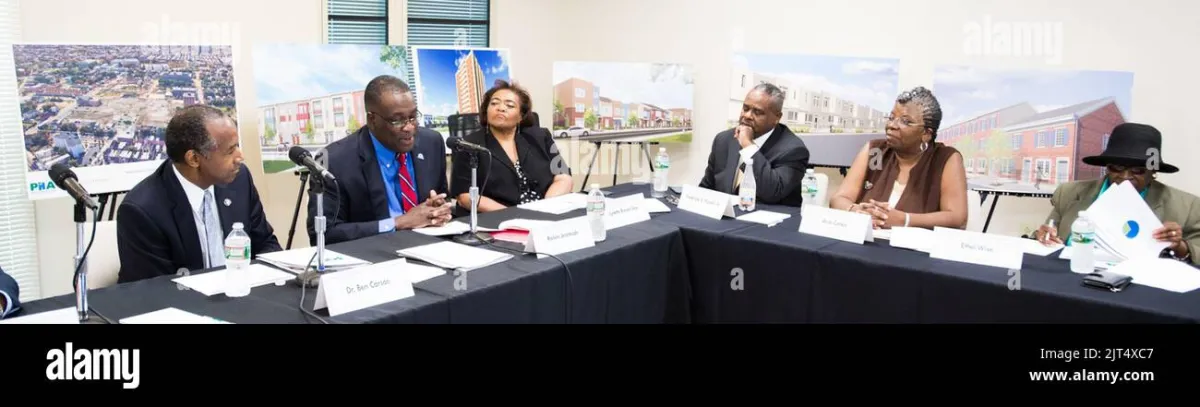 Photo: Department of Housing and Urban Development, via c8.alamy.com
The administrator arrived on a Tuesday morning, expecting to find a bustling desert community with 200+ residents, a thriving main street, and the infrastructure improvements his department had been funding for years. Instead, he found eight trailers, one barely functional gas pump, and a hand-painted sign that read "Carbonate, Nevada, Pop. 8."
 Photo: Carbonate, Nevada, via blogs.egu.eu
The subsequent investigation uncovered three decades of creative record-keeping, fictional residents, and phantom community services. Federal auditors traced grant money, cross-referenced census data, and interviewed the real residents, who had maintained their elaborate fiction with remarkable consistency and attention to detail.
The Gentle Reckoning
Surprisingly, federal prosecutors declined to press charges. The amounts involved were relatively small, spread across multiple agencies and decades of paperwork. More importantly, Carbonate's residents had never technically lied to federal officials—they had simply provided information that was creatively interpreted.
The town's fictional residents had aged, died, and been replaced according to normal demographic patterns. The community had reported legitimate hardships and challenges. Even the infrastructure improvements had been real, if somewhat scaled down from what the paperwork suggested.
Carbonate officially ceased to exist in 1985, when the post office closed and the last federal subsidies ended. The eight remaining families continued living in their desert trailers, but now they were just residents of unincorporated Nevada, not citizens of a federally recognized community.
Legacy of a Paper Town
The Carbonate affair led to significant reforms in federal rural assistance programs, including mandatory site visits, cross-agency data verification, and stricter oversight of grant applications. But it also highlighted something profound about the relationship between government and governed in America's vast empty spaces.
For thirty years, a handful of desert dwellers had successfully navigated the federal bureaucracy not through fraud or deception, but through an almost artistic understanding of how paperwork becomes reality in the eyes of distant administrators. They had created a community that existed everywhere except on the ground—in census records, grant applications, postal routes, and budget line items.
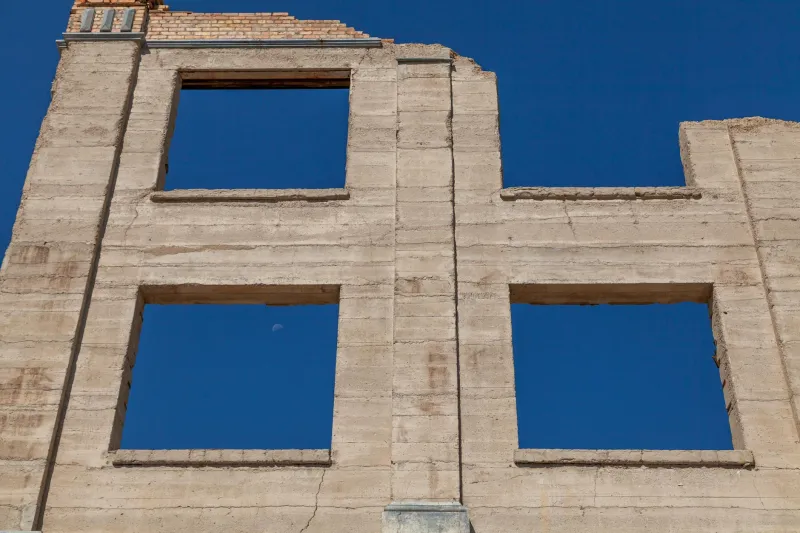
Today, the site of Carbonate is marked only by concrete foundations and rusted fence posts. But somewhere in federal archives, the town lives on in thousands of documents that prove, beyond any bureaucratic doubt, that it was once a thriving community of hardworking Americans who deserved every penny of support they received.
And maybe, in its own strange way, it was.