Double Nuclear Nightmare: The Businessman Who Cheated Death Twice in Three Days
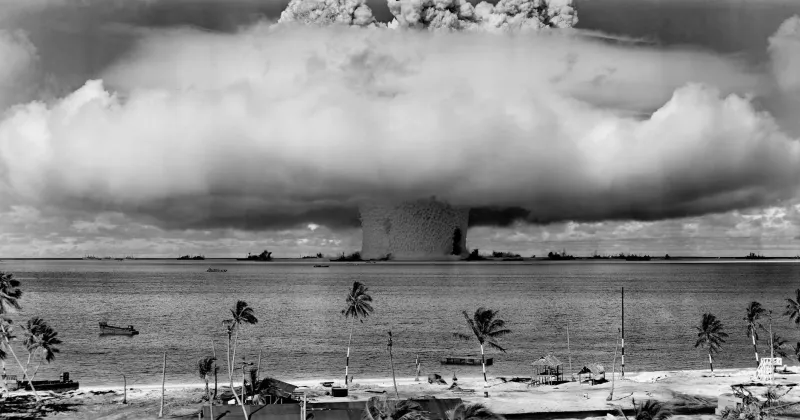
The Impossible Survivor
Imagine explaining to someone that you witnessed both atomic bomb attacks in Japan—and survived them both. That's exactly what Tsutomu Yamaguchi spent most of his life trying to convince people had actually happened to him.
On August 6, 1945, Yamaguchi was wrapping up a three-month business assignment in Hiroshima for Mitsubishi Heavy Industries. The 29-year-old naval engineer was walking to catch a streetcar when a blinding flash lit up the morning sky. The world's first nuclear weapon used in warfare had just detonated roughly two miles away.
When Lightning Strikes Twice
The blast threw Yamaguchi to the ground, temporarily blinded him, and left him with severe burns across his face, arms, and legs. But he was alive—something that couldn't be said for roughly 80,000 others in the immediate vicinity.
Despite his injuries, Yamaguchi managed to find his two colleagues, who had also survived. Together, they spent the night in an air raid shelter before making their way to the train station the next morning. Against all logic, trains were still running.
Yamaguchi's destination? His hometown of Nagasaki, 180 miles southwest.
He arrived home on August 8, bandaged and traumatized, telling his family an almost unbelievable story about a single bomb destroying an entire city. His wife tended to his wounds while he reported to his supervisor at the Mitsubishi shipyard.
The Second Flash
The morning of August 9, Yamaguchi was in his supervisor's office, still describing the devastation he'd witnessed in Hiroshima. His boss was skeptical—how could one bomb destroy a whole city?
At 11:02 AM, another blinding flash answered that question.
The second atomic bomb, "Fat Man," detonated about two miles from where Yamaguchi sat. This time, he knew exactly what was happening. He dove under a desk as the blast wave shattered windows and collapsed part of the building around him.
Once again, Yamaguchi survived.
The Physics of Survival
How did one man survive two nuclear explosions? The answer lies in distance, timing, and sheer luck.
In Hiroshima, Yamaguchi was far enough from ground zero to avoid the initial radiation burst that killed most people within a mile radius. The hills around the city also helped deflect some of the blast's force. His burns came from the thermal radiation—the intense heat that followed the initial flash.
In Nagasaki, he was again outside the immediate kill zone. The bomb's impact was also somewhat lessened by the city's mountainous terrain, which contained the blast more than Hiroshima's relatively flat landscape.
But perhaps most importantly, Yamaguchi understood what was happening the second time. That split-second recognition allowed him to take cover immediately, rather than standing in shock like many other victims.
A Story Too Strange for Officials
For decades, Yamaguchi's account remained largely unrecognized by Japanese authorities. The government had officially acknowledged him as a hibakusha (atomic bomb survivor) for Nagasaki, but his Hiroshima experience was treated with skepticism.
The statistical improbability was staggering. Of the roughly 165 people officially recognized as surviving both bombings, Yamaguchi was the only one whose presence in both cities was thoroughly documented and verified.
It wasn't until 2009—just months before his death at age 93—that the Japanese government officially recognized Yamaguchi as a survivor of both atomic bombings. He had spent 64 years trying to get people to believe what had happened to him.
Living with the Unthinkable
Yamaguchi's survival came at a cost. He suffered from radiation-related illnesses throughout his life, including cataracts and hearing loss. His wife developed liver and kidney cancer, likely from exposure to radioactive fallout, and died in 2008.
But he also became a powerful advocate for nuclear disarmament. In his later years, he spoke publicly about his experiences, emphasizing the human cost of nuclear weapons. He met with documentary filmmakers and even spoke with U.S. officials about the lasting impact of the bombings.
The Reluctant Celebrity
Yamaguchi often said he felt guilty about surviving when so many others didn't. He struggled with what he called his "double hibakusha" status, wondering why fate had placed him in both cities at exactly the wrong—or perhaps right—moments.
"I thought the mushroom cloud had followed me from Hiroshima," he once told reporters.
His story challenges our understanding of probability and survival. In a world where people buy lottery tickets hoping to beat odds of millions to one, Yamaguchi experienced something far more unlikely—and far more terrible.
When he died in 2010, Yamaguchi left behind a story so extraordinary that it continues to challenge belief. Sometimes reality writes scenarios that fiction wouldn't dare attempt—and one man's life became living proof that the impossible sometimes happens twice.