The Chemistry Student Who Turned Purple Into a Million-Dollar Mistake
The Easter Vacation That Changed Everything
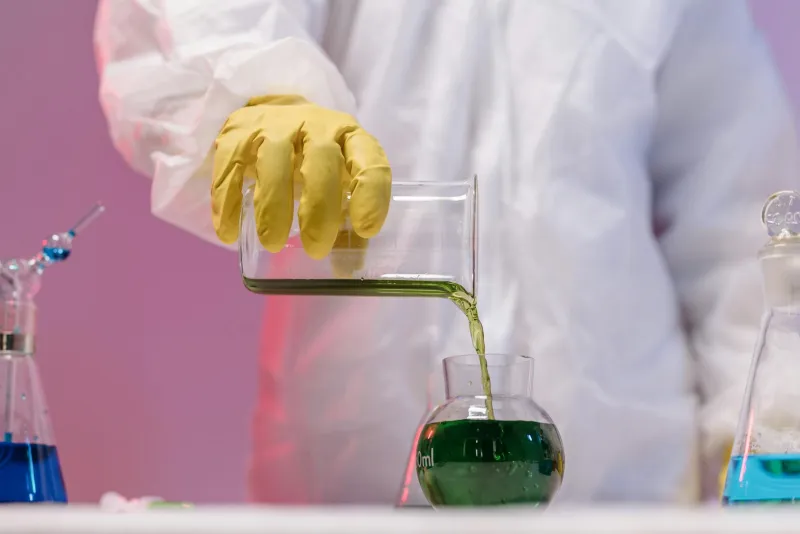
Picture this: It's 1856, and while most teenagers are enjoying their Easter break, 18-year-old William Perkin is hunched over bubbling beakers in his makeshift home laboratory in London. His mission? To synthesize quinine, the precious antimalarial drug that could save thousands of lives. What he got instead was a goopy, purple mess that looked like the aftermath of a grape juice explosion.
Most people would have scrapped the experiment and started over. Perkin, however, noticed something extraordinary about his purple disaster. When he added alcohol to clean up the mess, the solution turned the most brilliant, vibrant purple he'd ever seen.
When Failure Becomes Fashion
Perkin had stumbled upon something that would revolutionize not just chemistry, but the entire fashion industry. Before his accidental discovery, purple was the color of royalty for a very practical reason—it was impossibly expensive to produce. The only way to create purple dye was from thousands of murex shells found in the Mediterranean, making purple cloth worth more than gold by weight.
Suddenly, this teenager had figured out how to make purple in a test tube using coal tar, a grimy byproduct of gas production that most people considered worthless waste.
The Teenager Who Outsmarted an Industry
Rather than returning to his studies at the Royal College of Chemistry, Perkin made a decision that would make modern entrepreneurs proud. He convinced his father to invest in a dye factory, dropped out of college, and bet everything on his purple accident.
His chemistry professor was furious. "You're throwing away a promising scientific career for this commercial nonsense!" August Wilhelm von Hofmann reportedly told his star pupil. Hofmann couldn't have been more wrong.
Perkin named his creation "mauve" after the French word for the mallow flower, and it became the iPhone of the 1850s—everyone had to have it.
Purple Fever Sweeps the World
The timing couldn't have been better. Queen Victoria herself wore a mauve gown to her daughter's wedding in 1858, and suddenly every fashionable woman in Europe and America was desperate for purple clothing. The color became so popular that the period is now known as the "Mauve Decade."
Newspapers ran breathless articles about "mauve mania." Department stores couldn't keep purple fabric in stock. Even men's ties and handkerchiefs came in shades of Perkin's purple. The young inventor had accidentally tapped into something deeper than fashion—he'd democratized luxury.
The Accidental Birth of Modern Chemistry
What makes Perkin's story truly remarkable isn't just that he got rich from a mistake (though he did become a millionaire by age 25). His discovery launched the entire synthetic chemistry industry. Before mauve, most chemicals came from natural sources—plants, animals, or minerals. Perkin proved that chemists could create entirely new substances in laboratories.
Within decades, synthetic dyes were producing every color imaginable. German companies like BASF and Bayer, which started as dye manufacturers, evolved into pharmaceutical and chemical giants that still dominate global markets today.
The Ripple Effect of Purple
Perkin's accidental discovery had consequences nobody could have predicted. The synthetic dye industry created the foundation for modern pharmaceuticals—many of today's medicines are chemical cousins of those early dyes. The techniques developed to mass-produce mauve led to advances in industrial chemistry that enabled everything from plastics to explosives.
Even more surprisingly, the profits from synthetic dyes funded much of Germany's scientific research in the late 1800s, helping establish the country as a global leader in chemistry and engineering.
The Man Behind the Mistake
Perkin never forgot that his fortune came from a failed experiment. He continued researching throughout his life, discovering new synthetic compounds and perfecting manufacturing processes. When he was knighted in 1906, fifty years after his purple accident, he remained humble about his discovery.
"I was simply trying to make quinine," he told a reporter. "The purple was entirely unexpected."
Today, synthetic dyes color everything from our clothes to our food. Every time you see a vibrant purple sports jersey, a magenta smartphone case, or even artificial food coloring, you're looking at the descendants of William Perkin's Easter vacation experiment gone wrong.
A Lesson in Beautiful Mistakes
Perkin's story proves that some of the most important discoveries happen when we're trying to do something else entirely. His failed attempt to cure malaria ended up creating an industry worth billions of dollars and changing how humans interact with color forever.
Not bad for a chemistry student who just couldn't get his homework right.