The Doctor Who Had to Cut Himself Open 3,000 Miles from Help
Picture this: You're 3,000 miles from the nearest hospital, surrounded by nothing but ice and howling winds. Your appendix is about to burst, and you're the only doctor for thousands of miles. Most people would write their will. Leonid Rogozov grabbed a scalpel.
In 1961, the 27-year-old Soviet physician found himself in this exact nightmare scenario at Novolazarevskaya, a remote Antarctic research station. What followed was perhaps the most extraordinary act of self-preservation in medical history — a story so unbelievable it sounds like fiction, yet every documented detail confirms it really happened.
When Your Only Option Is Impossible
Rogozov had signed up for the Antarctic expedition knowing the risks. As the station's only doctor, he was responsible for treating everything from frostbite to broken bones among the 12-man crew. What he hadn't counted on was becoming his own patient in the most critical way possible.
On April 29, 1961, Rogozov woke up feeling nauseated with severe pain in his lower right abdomen. As a trained surgeon, he knew exactly what was happening — his appendix was inflamed and potentially ready to rupture. In any normal circumstance, this would mean an immediate trip to the operating room. But there was nothing normal about being trapped in Antarctica during the polar winter.
The nearest medical facility was thousands of miles away, and with temperatures dropping to -60°F and constant blizzards, evacuation was impossible. Radio communication with the outside world was spotty at best. Rogozov faced a stark reality: perform the surgery himself or die from peritonitis when his appendix burst.
The Setup That Defied Logic
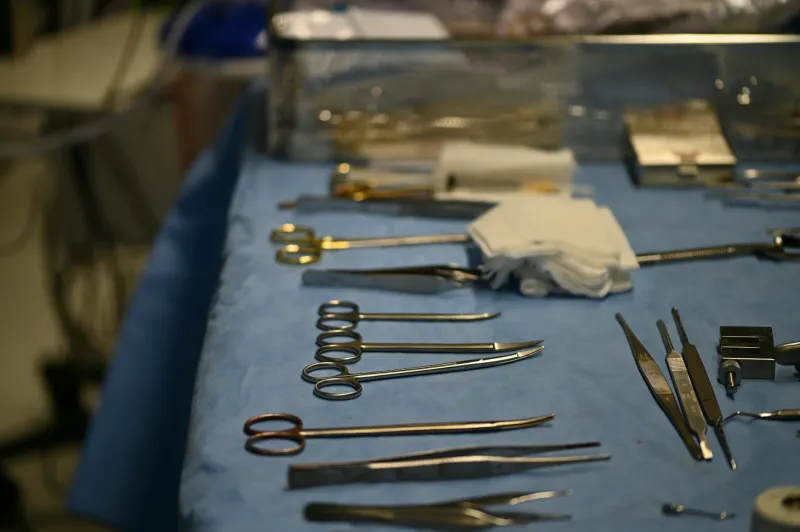
Most people can barely look at their own blood, let alone slice themselves open. But Rogozov spent the next day methodically planning what seemed impossible. He converted the station's dining room into a makeshift operating theater, setting up surgical lights and sterilizing instruments.
The psychological challenge was staggering. Not only would he have to cut into his own abdomen while fully conscious, but he'd have to maintain the steady hands and clear thinking of a surgeon while experiencing the pain of a patient. One wrong move could nick an artery or damage vital organs.
Rogozov enlisted two of his colleagues — meteorologist Aleksandr Artemev and station engineer Zinovy Teplinsky — as assistants. Neither had any medical training, but they would have to hold instruments, adjust the surgical light, and hand him tools while trying not to pass out at the sight of their friend cutting himself open.
Surgery by Mirror: The Impossible Operation
On May 1, 1961, Rogozov began the operation that would either save his life or kill him. Using a mirror to see what he was doing, he injected himself with local anesthesia — though he couldn't use too much without risking unconsciousness. He would have to feel much of what was happening.
The first incision was the hardest. Imagine the mental fortitude required to deliberately cut into your own flesh, knowing that everything that happens next depends on your ability to stay calm and precise. Rogozov made a four-inch incision in his lower right abdomen, working entirely by feel and mirror image.
As he cut deeper, the mirror became increasingly difficult to use — everything appeared reversed, making precise movements nearly impossible. Halfway through the operation, he abandoned the mirror entirely and worked by touch alone, his hands navigating inside his own abdominal cavity.
When the Doctor Became the Patient
The most terrifying moment came when Rogozov began to fade. The combination of blood loss, pain, and the surreal stress of operating on himself caused him to nearly lose consciousness. His assistants watched in horror as their friend and only medical lifeline wavered on the edge of collapse.
But Rogozov forced himself back to awareness. Taking short breaks when the pain became overwhelming, he continued the delicate work of locating and removing his infected appendix. The entire procedure took nearly two hours — an eternity when you're cutting into yourself with makeshift tools in subzero temperatures.
When he finally extracted the swollen appendix, Rogozov discovered it was on the verge of rupturing. Had he waited even another day, the infection would have spread throughout his abdomen, almost certainly killing him.
The Recovery That Shouldn't Have Worked
Against all medical logic, Rogozov's self-surgery was a complete success. Within two weeks, he was back to his regular duties, treating other members of the expedition. The wound healed cleanly, with no signs of infection or complications.
When news of the operation reached the outside world, medical experts were stunned. The combination of surgical skill, psychological resilience, and sheer luck required to pull off such a feat seemed impossible. Yet Rogozov's detailed diary entries and witness accounts confirmed every unbelievable detail.
A Legacy of the Impossible
Rogozov returned to the Soviet Union as a hero, though he rarely spoke publicly about his Antarctic surgery. He continued practicing medicine until his death in 2000, but nothing in his career would ever match the impossibility of that May night in Antarctica.
Today, his story remains a medical legend — proof that human determination can overcome seemingly insurmountable odds. It's a reminder that sometimes the most unbelievable stories are the ones that actually happened, witnessed by colleagues who still couldn't quite believe what they'd seen.
In a world where we call an Uber for paper cuts, Leonid Rogozov performed surgery on himself with a mirror and a prayer. And somehow, impossibly, it worked.